Mind Palace
EEG neurofeedback VR for practicing meditation.
- Year
- 2021
- Role
- Interaction Designer, Prototyper
- Tags
- Virtual RealityBCIHCI
How can virtual reality and brain signals help people practice meditation?
Mind Palace is an EEG neurofeedback VR therapy experience for self-awareness and self-regulation. It offers three game-like practices built on traditional techniques: breathing regulation, object meditation, and body scan. A Muse headband reads your mindfulness state in real time, and the VR environment responds to it.
How can virtual reality and brain signals help people practice meditation?
Mind Palace is an EEG neurofeedback VR therapy experience for self-awareness and self-regulation. It offers three game-like practices built on traditional techniques: breathing regulation, object meditation, and body scan. A Muse headband reads your mindfulness state in real time, and the VR environment responds to it.
Meditation is usually taught eyes closed. We asked whether proper visual guidance in an immersive environment could instead help people clear their minds of thought and reach a mindful state.
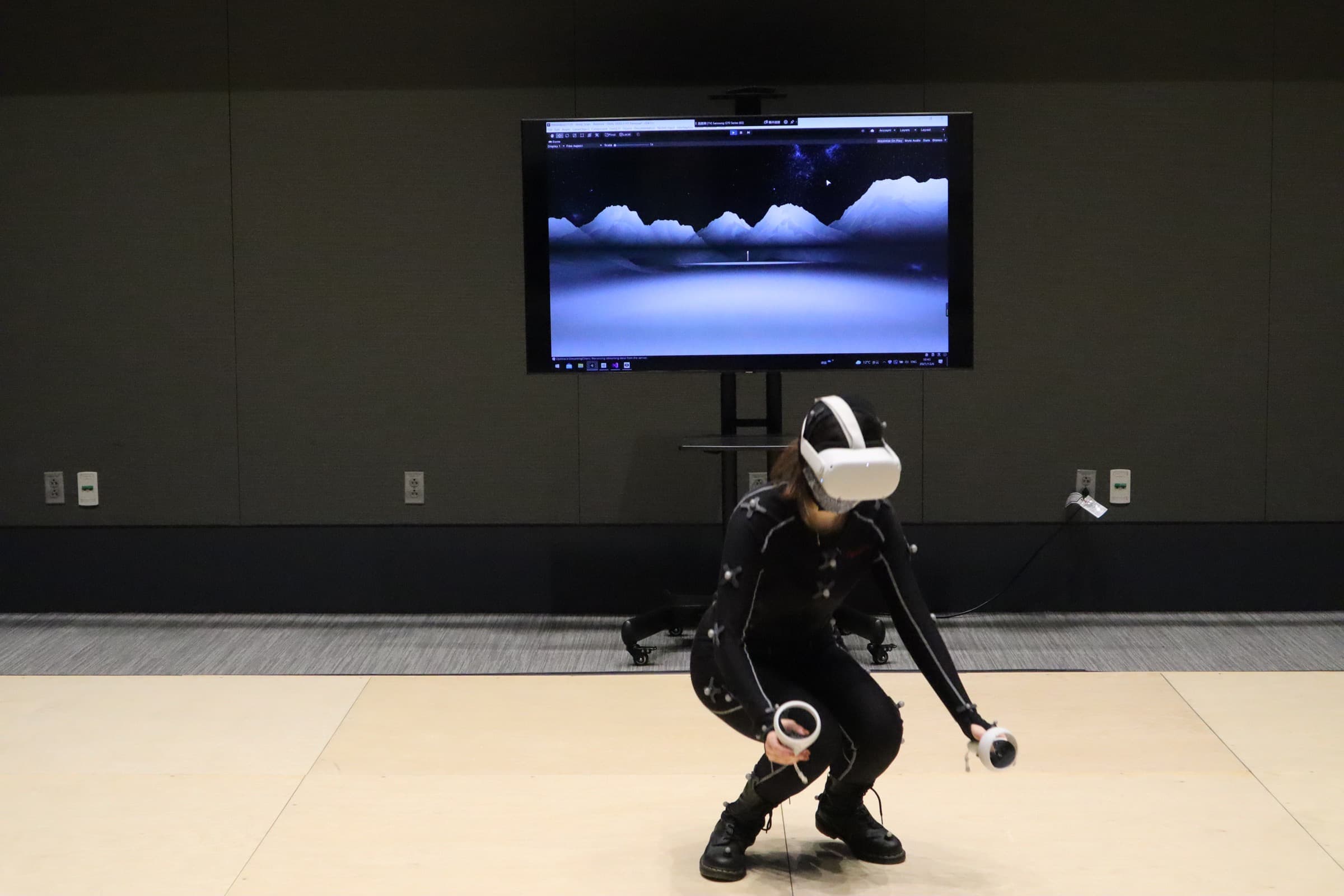
In the breathing practice you pick up balls and feel haptic feedback from the controllers. The vibration frequency follows your breathing, and the depth of breath is adjustable. A futon in the scene suggests sitting down comfortably.
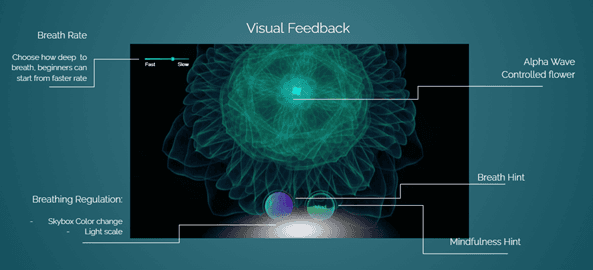
A mandala displays the live EEG feedback. Its color intensity follows your current concentration level, so you can watch your own attention settle as your breathing slows.
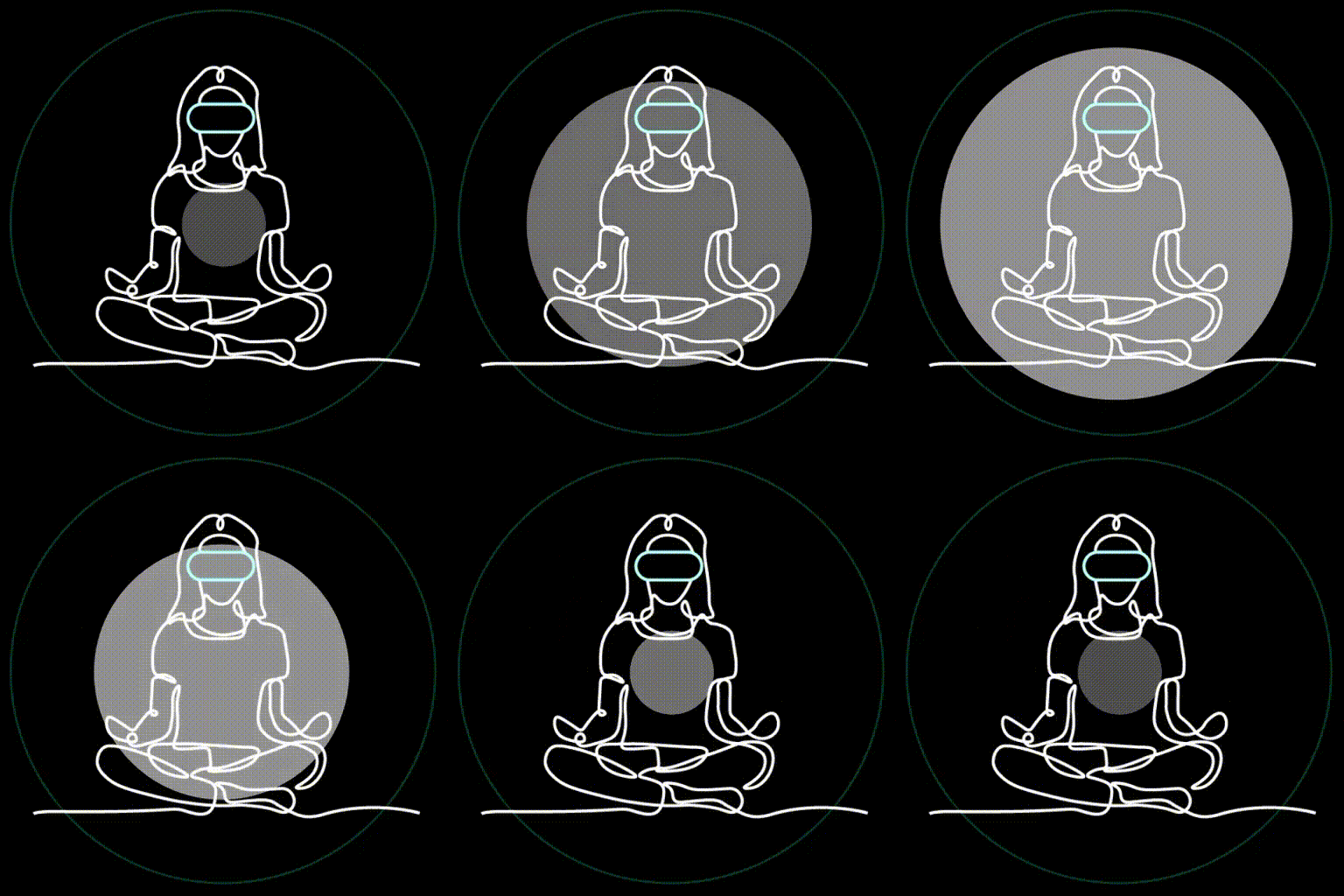
The second practice uses a blooming lotus as the object of concentration. The lotus blooms at a speed proportional to your concentration level. Two diagrams under the game interface show breathing frequency and concentration in real time.
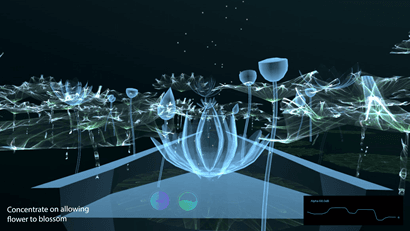
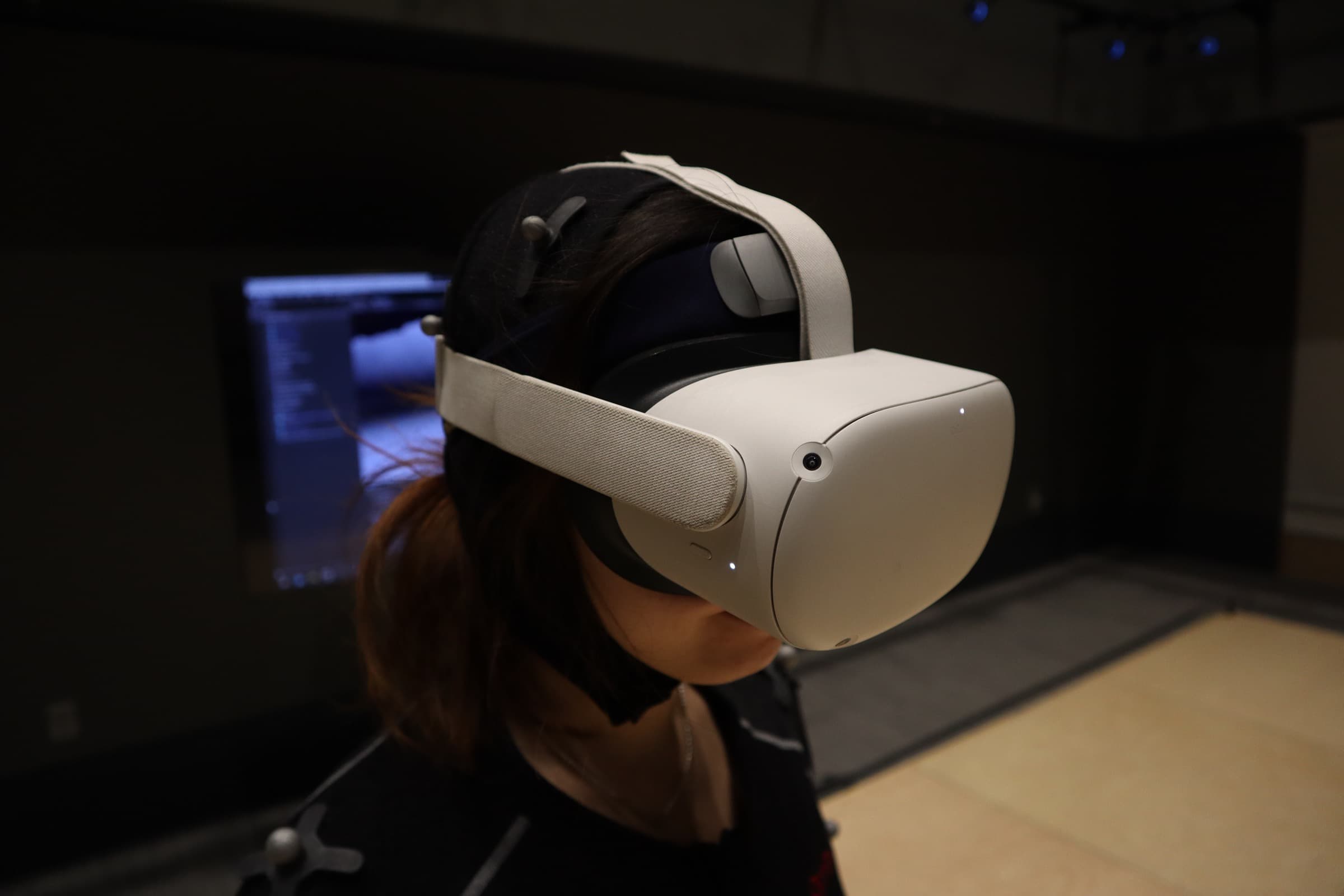
The third scene combines awareness meditation with a body scan. Thoughts and emotions are visualized as particles flowing through the body, observed without judgment.
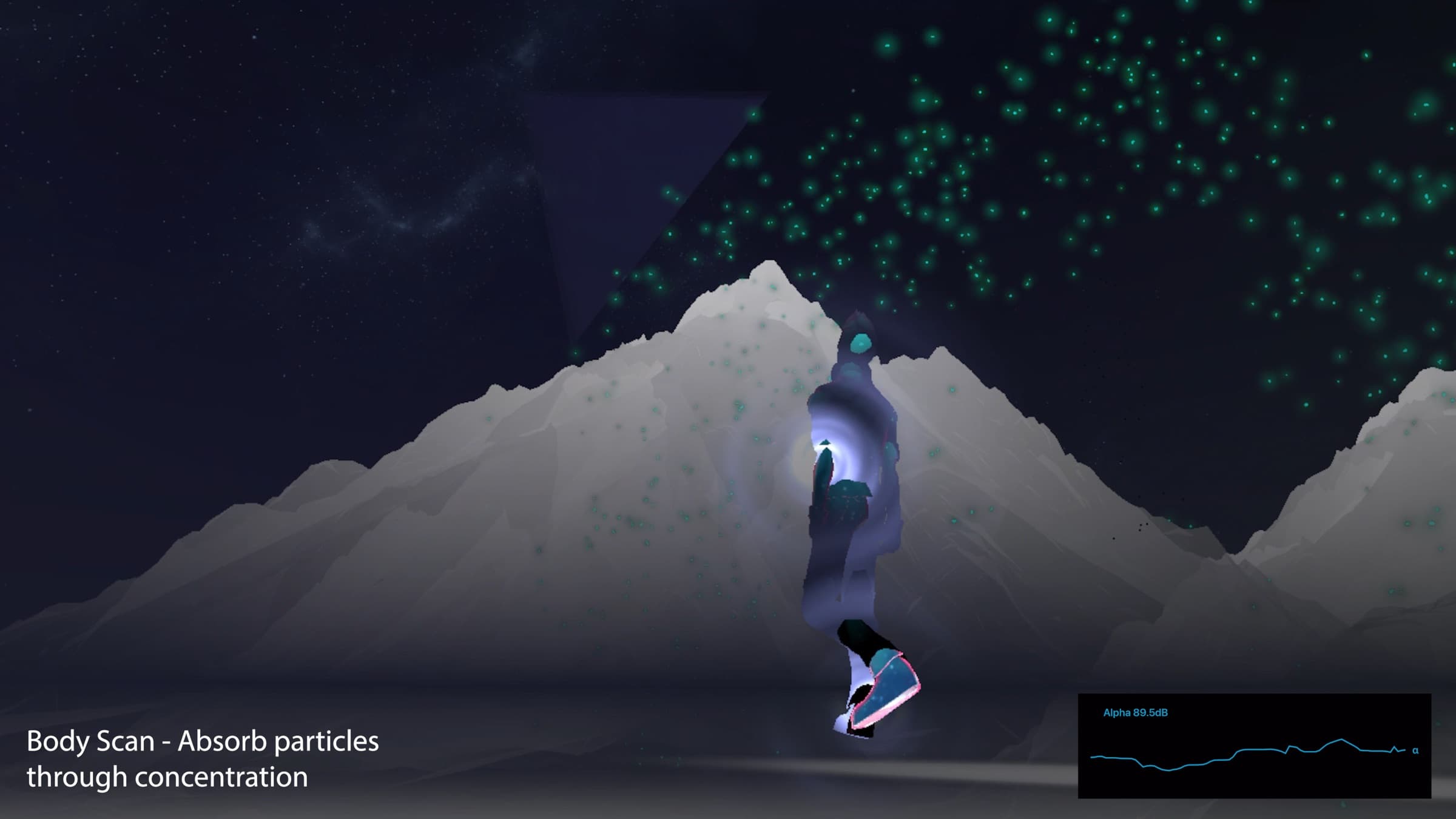
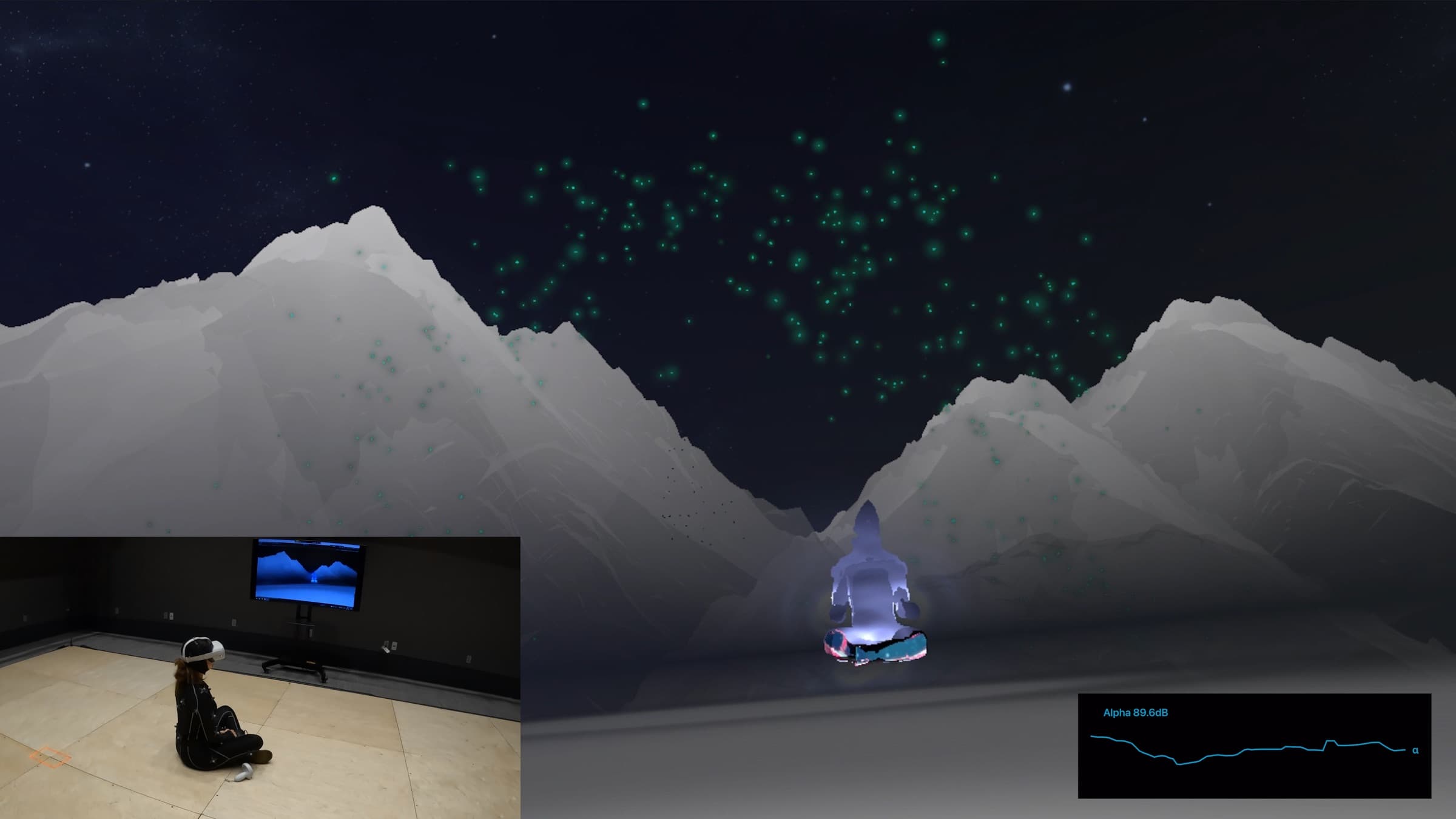
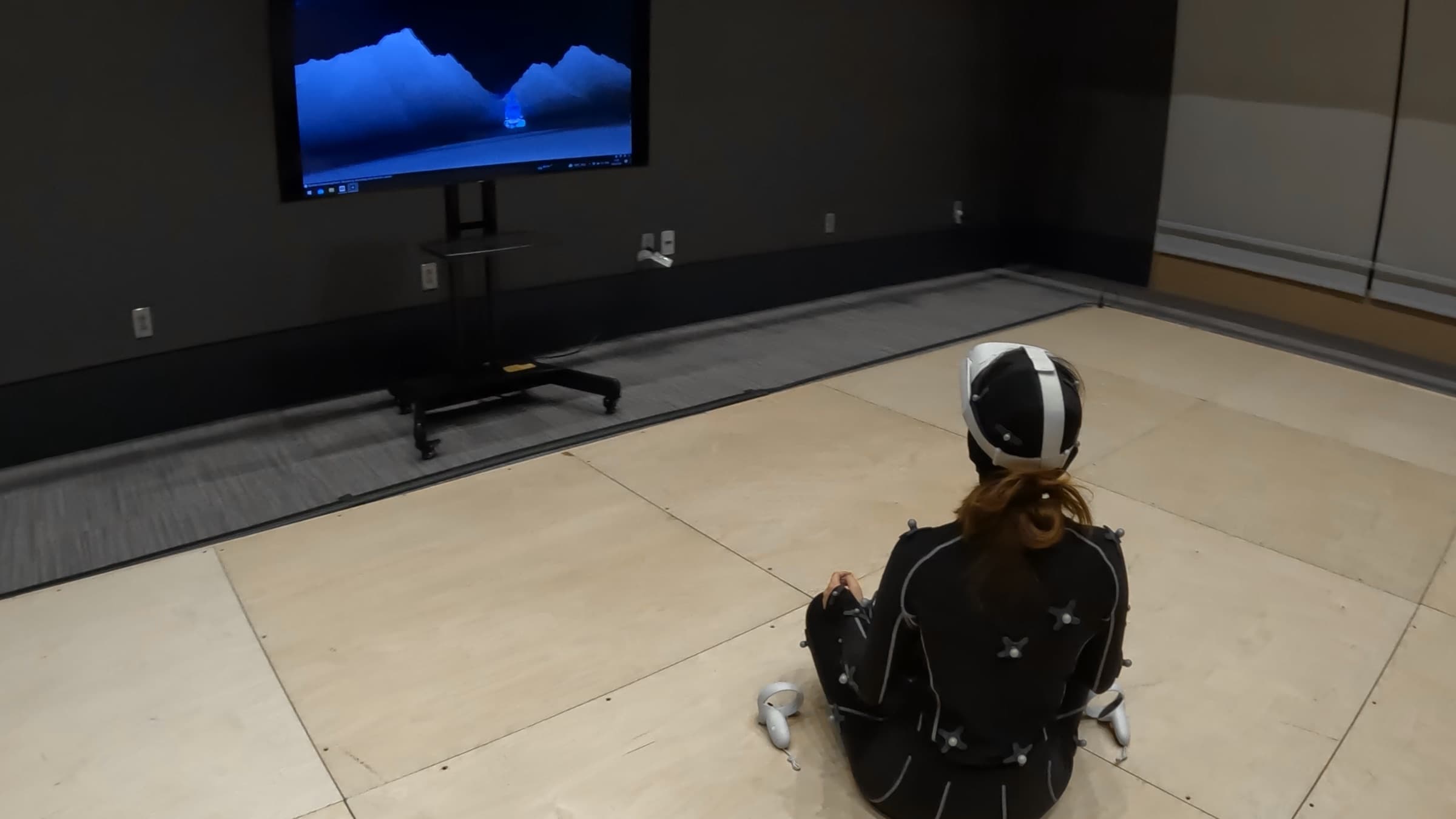
Moving your body brings attention to the actual movements. Muse's accelerometer detects them and guides you back into a balanced position.
Credits
- Team
- Joseph Wu, Xiao-Fei Hong, Chen Liu
- Context
- MIT MAS.S65: Cognitive Augmentation, Fall 2021
- Professor
- Pattie Maes
- Tools
- Unity, C#, Muse EEG