TeleCon
A pneumatic silicone wearable that saves and replays touch.
- Year
- 2021
- Role
- Interaction Designer, Prototyper
- Tags
- HapticsSoft RoboticsVirtual RealityHCI
A wearable that saves and replays touch.
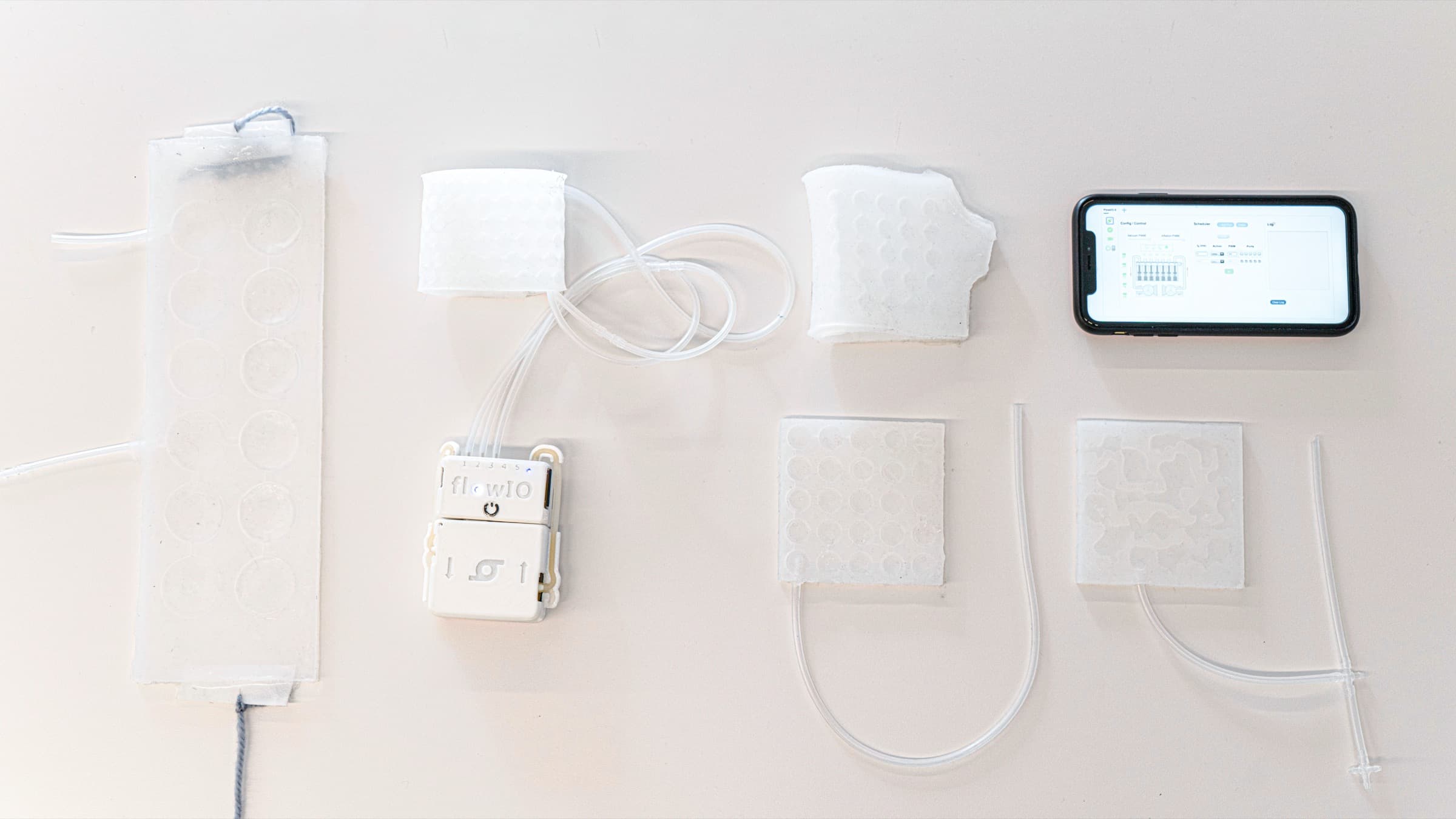
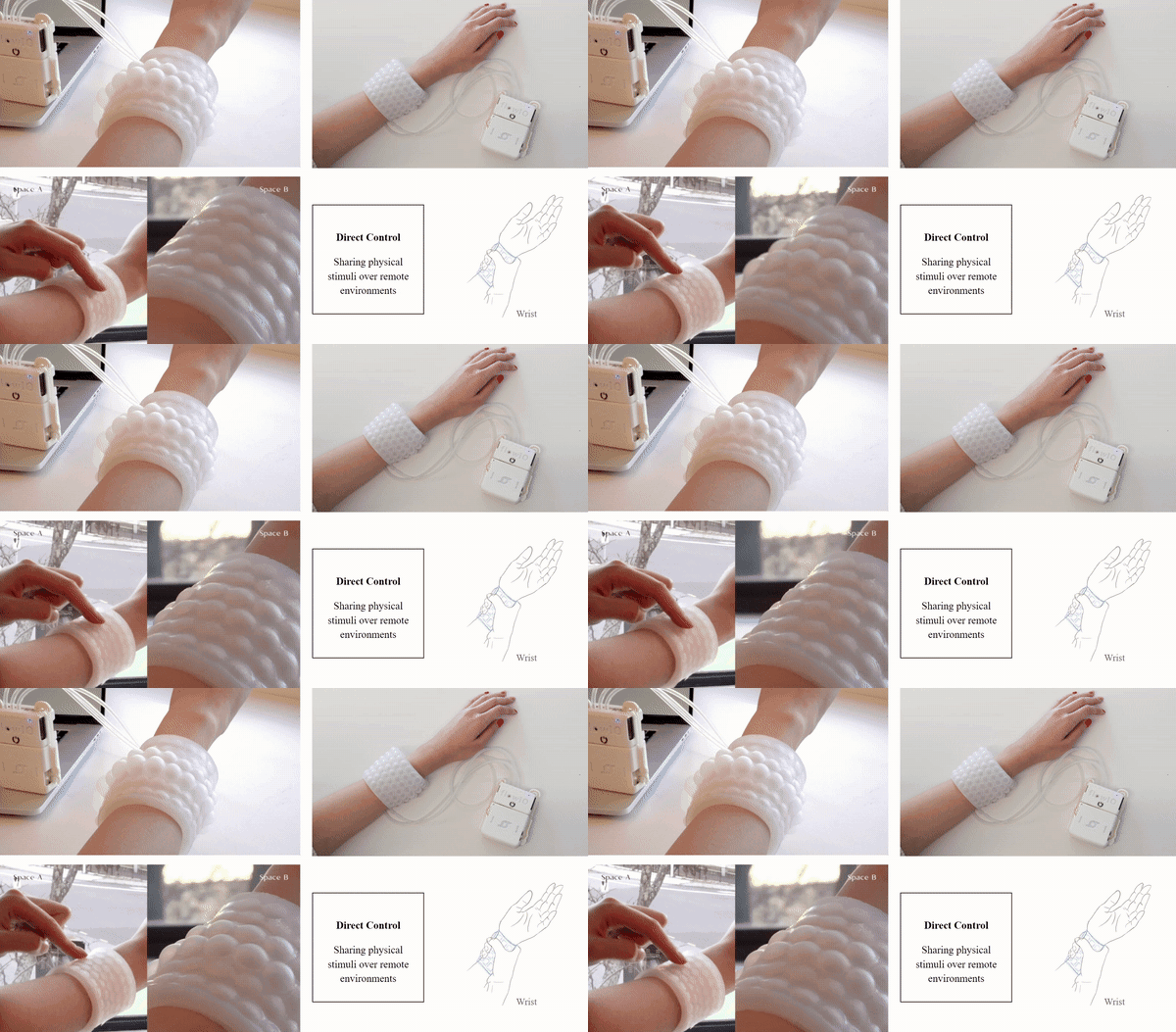
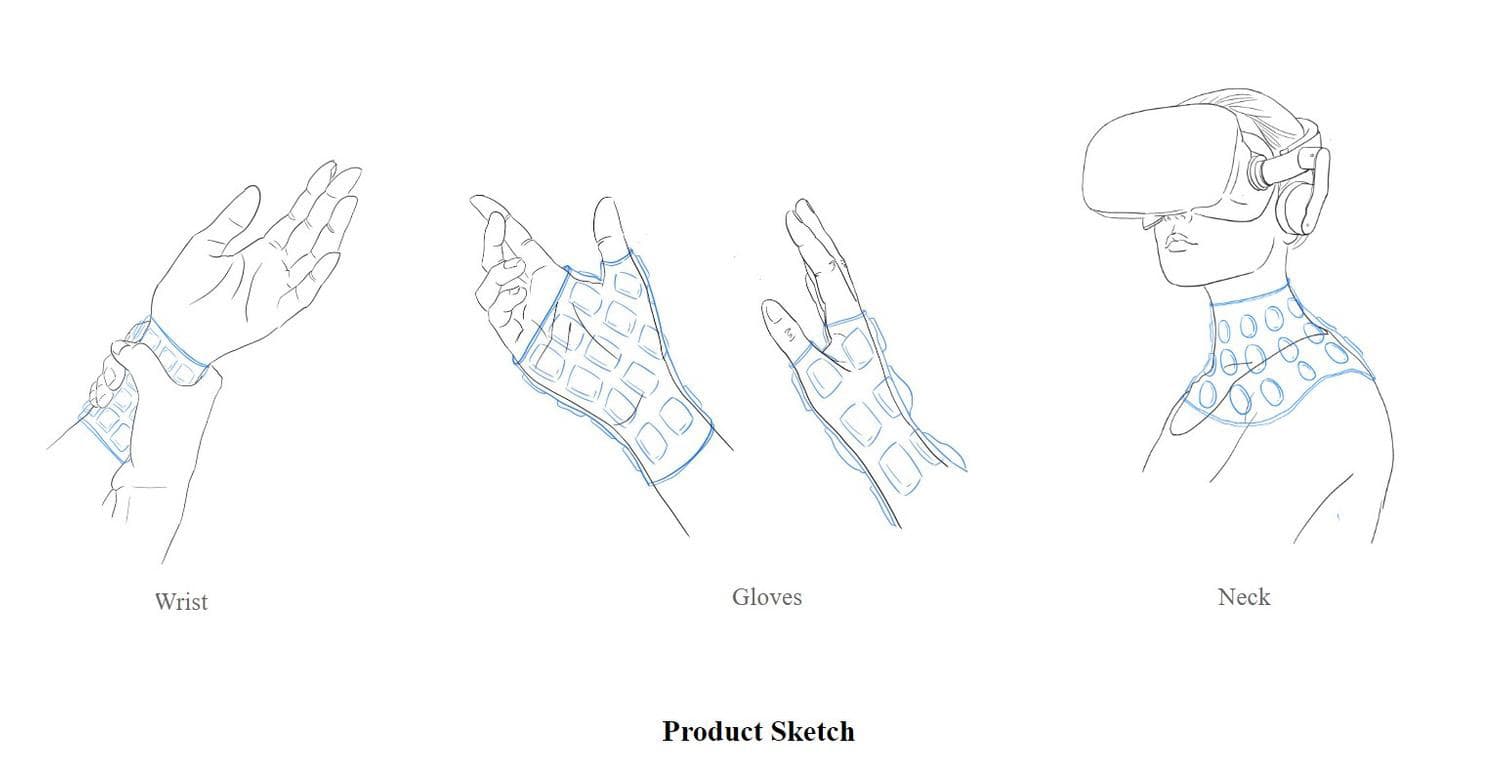
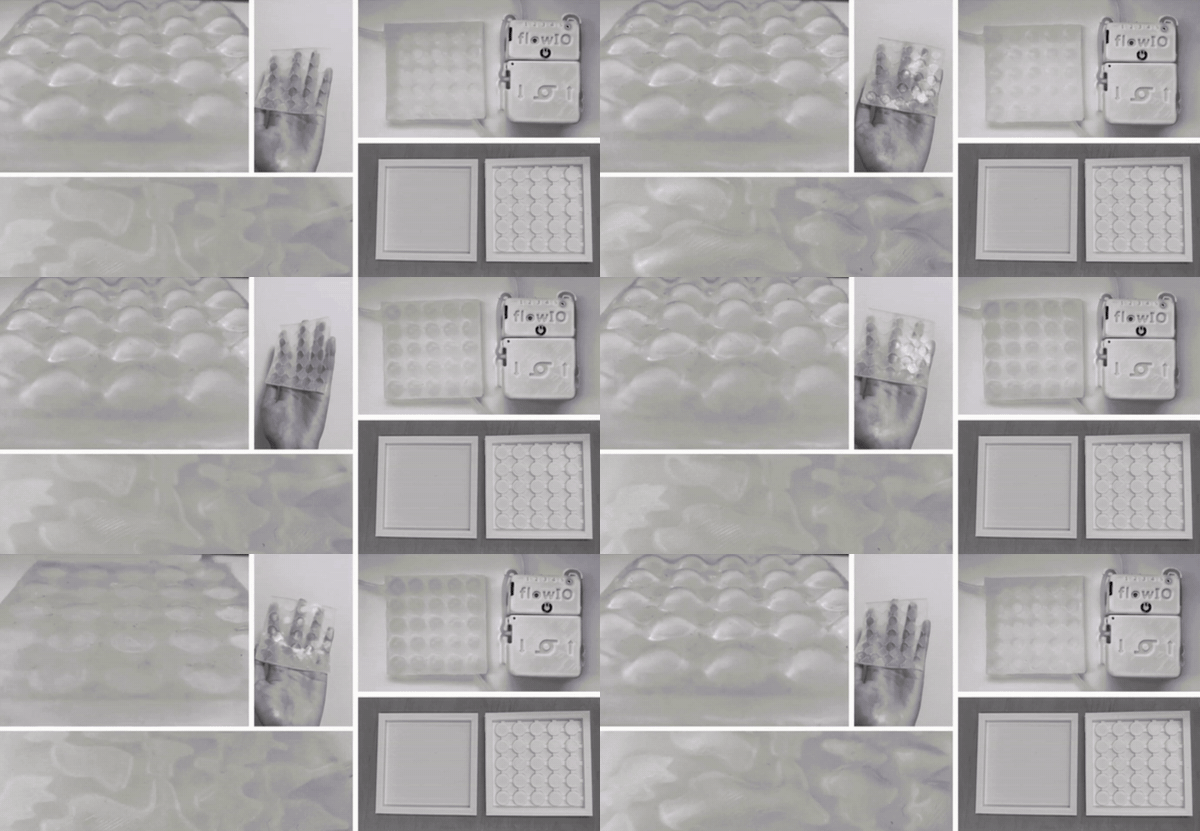
TeleCon (Tele + Silicon) is a pneumatically actuated haptic wearable, a soft silicone patch worn on the hand, wrist, or neck. Force-feedback silicone actuators push against the body to create tactile cues. The patch is self-contained and can be worn anywhere on the skin.
A wearable that saves and replays touch.
TeleCon (Tele + Silicon) is a pneumatically actuated haptic wearable, a soft silicone patch worn on the hand, wrist, or neck. Force-feedback silicone actuators push against the body to create tactile cues. The patch is self-contained and can be worn anywhere on the skin.
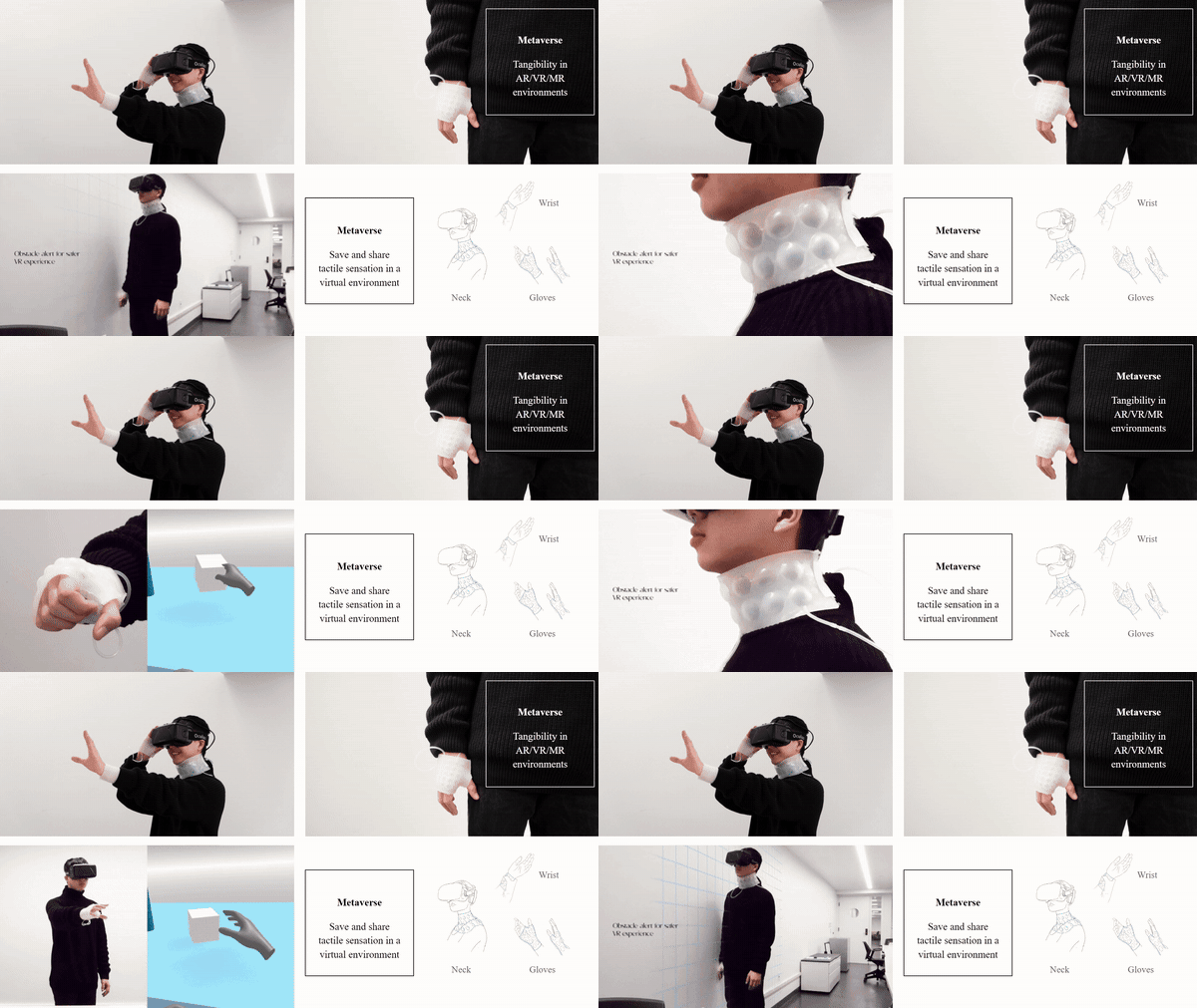
Most VR haptics put force feedback on the fingers, but feeling the shape of an object takes the whole hand. When your hand meets a virtual object, the patches on the hand and wrist inflate into a graspable shape, then deflate when the object is out of play.
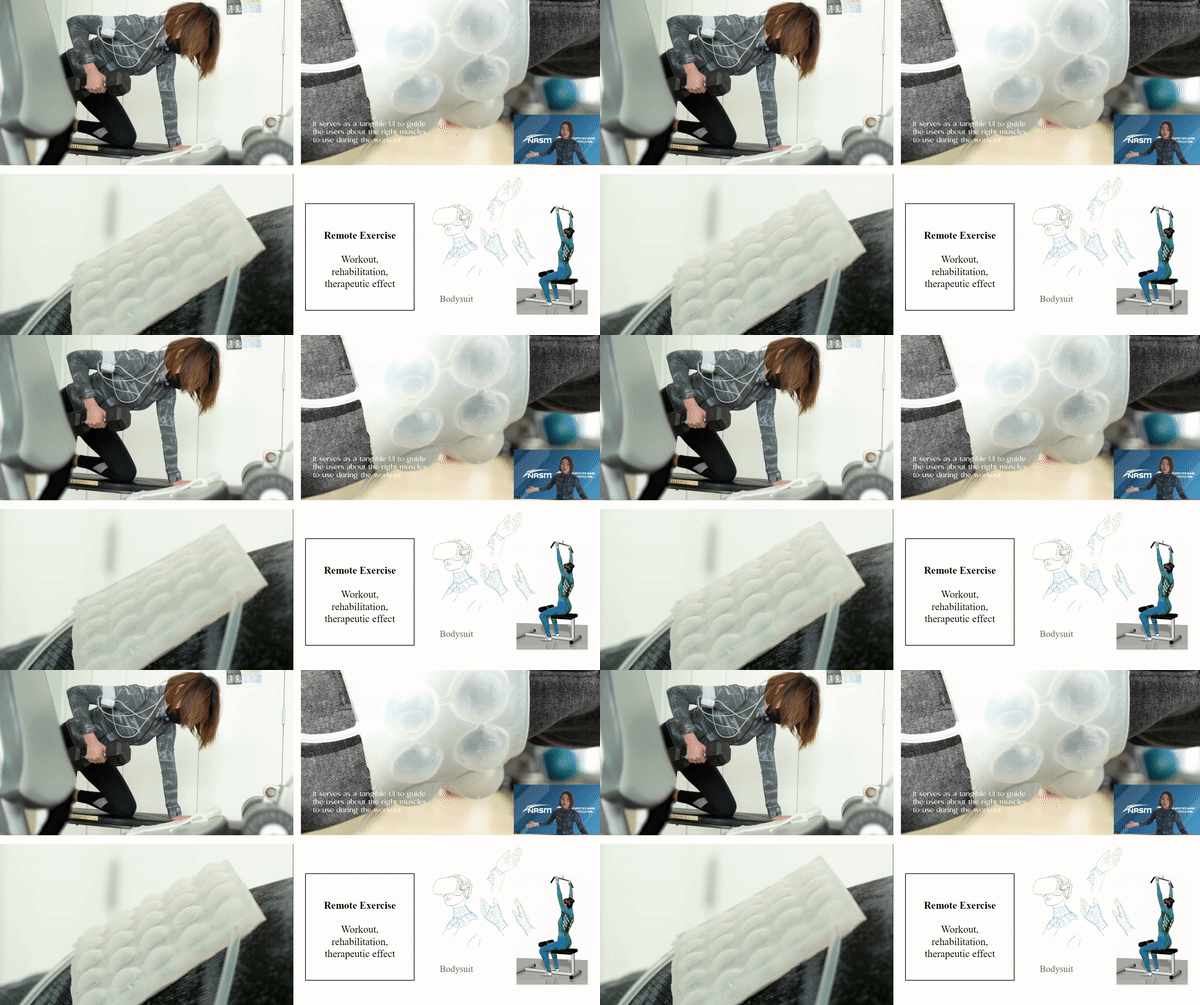
The neck patch is for safety. Inside a headset you cannot see the room, so the patch inflates as you get close to a wall or an obstacle. We chose the neck because the neck leads movement, and pressure there can change where you go.
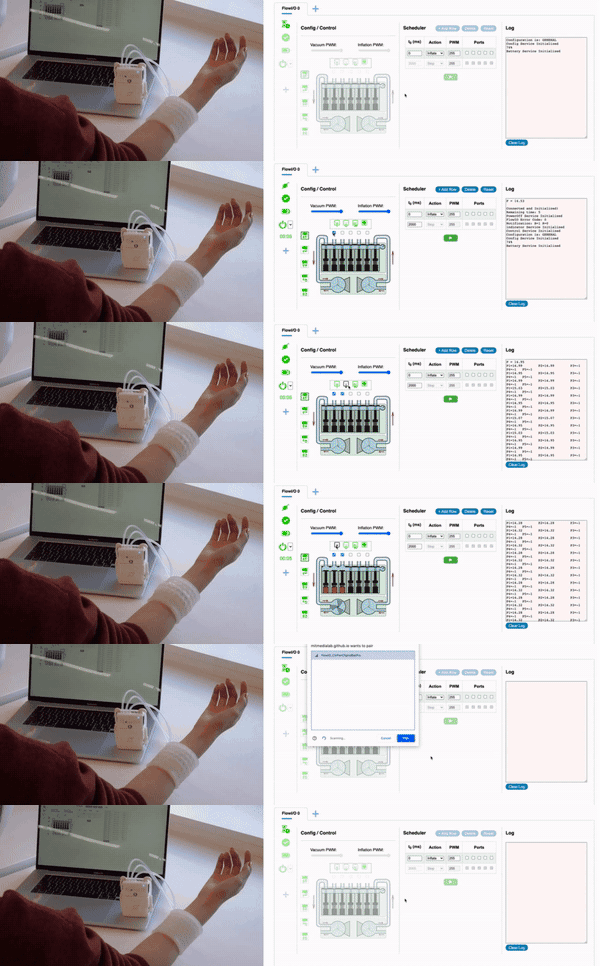
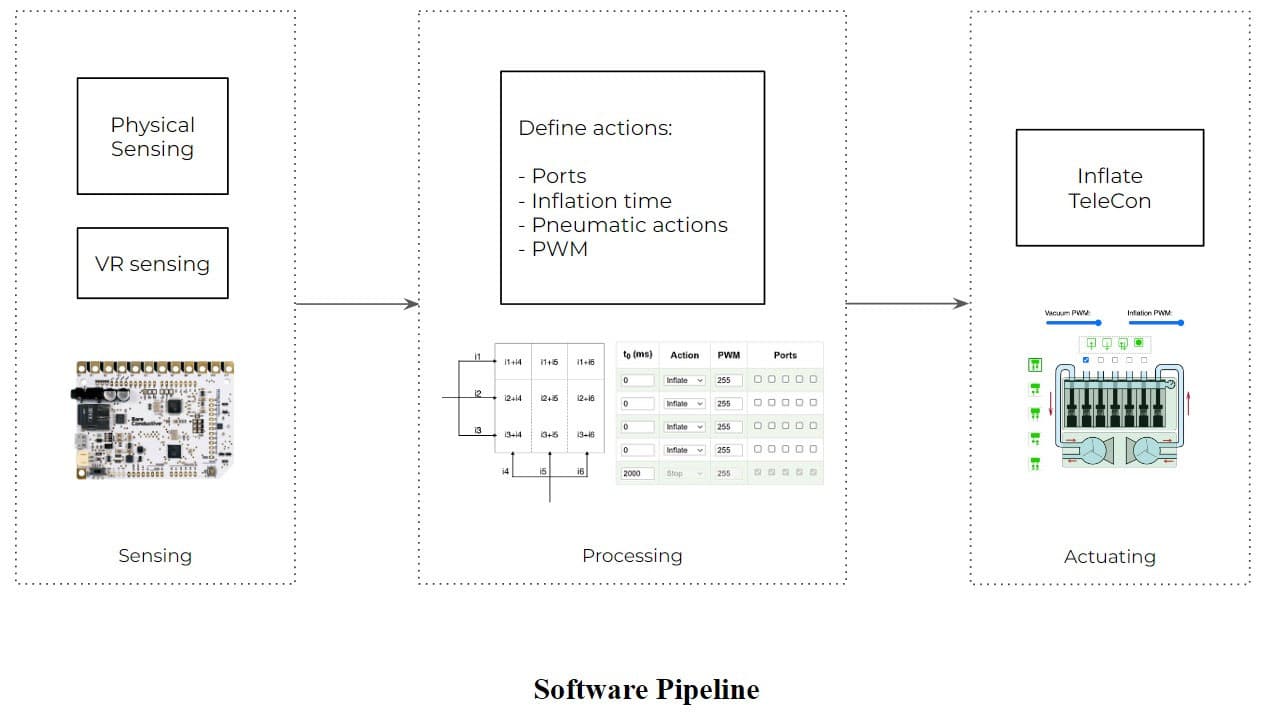
Audio and images are easy to save and share. Tactile sensation is not. We designed an app that records the patterns and forces of inflation, so something ephemeral like bubbles popping on your skin or a dog's paw can be saved and replayed.
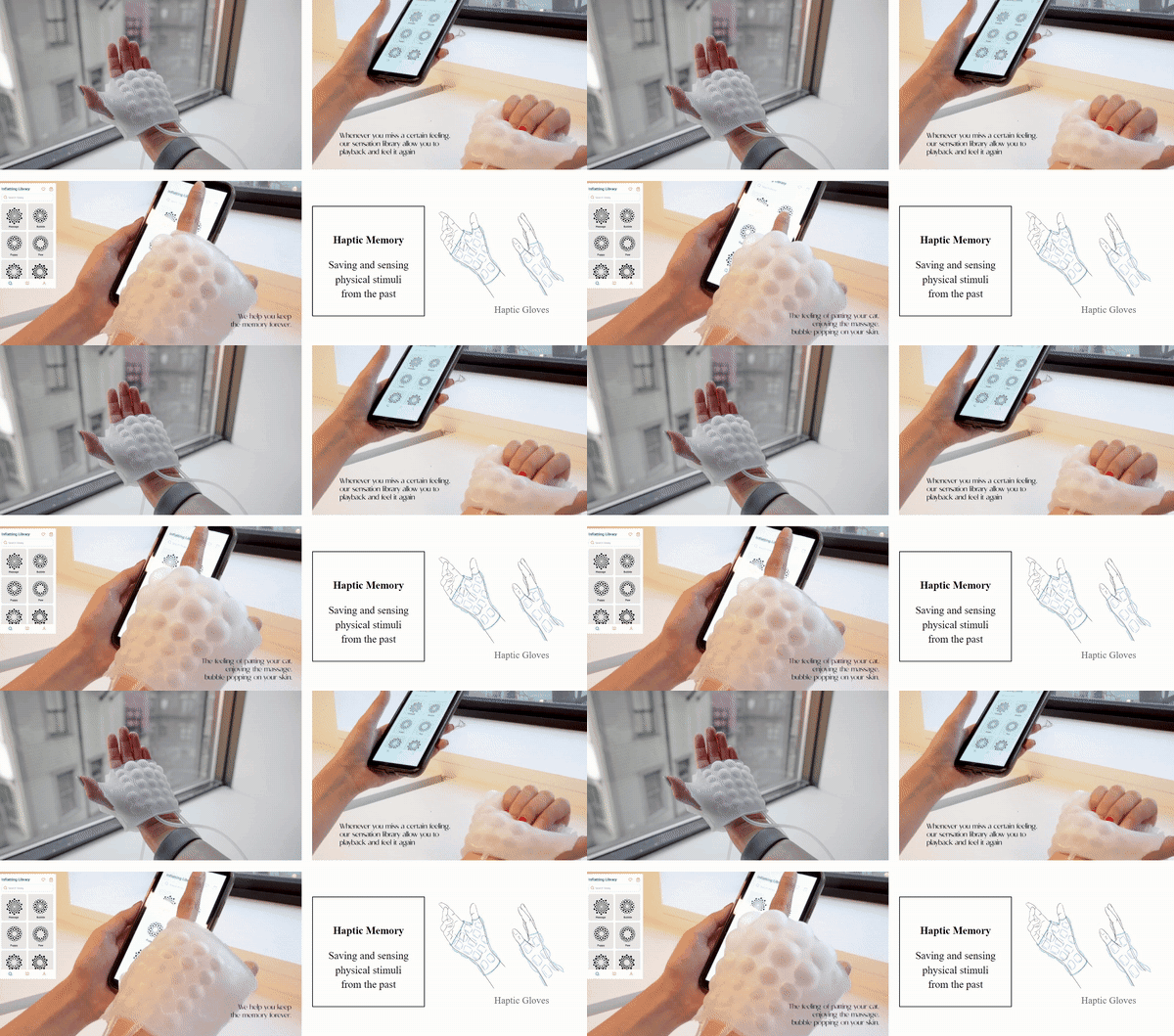
A saved sensation can be sent to another wearer or revisited later. Replaying a memory with its touch intact makes it closer to the original experience than audio and video alone.
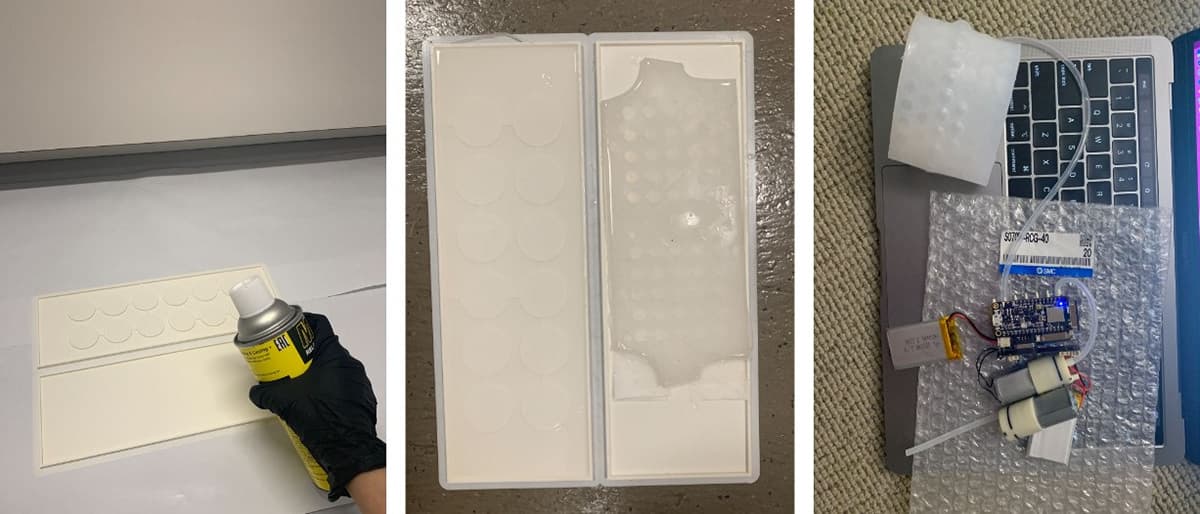
The patches are cast silicone with embedded air chambers, driven by a pneumatic rig controlled from an Arduino.
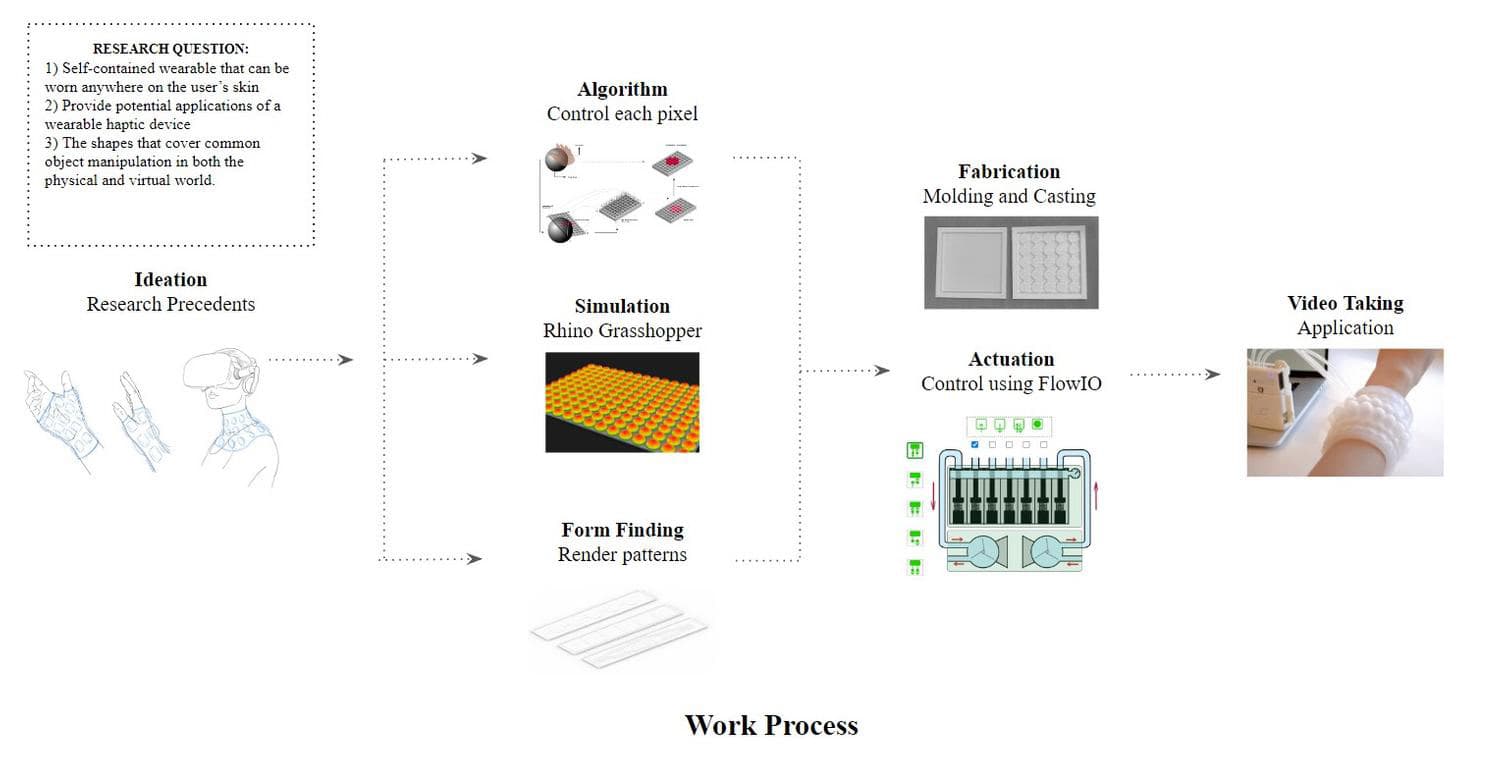
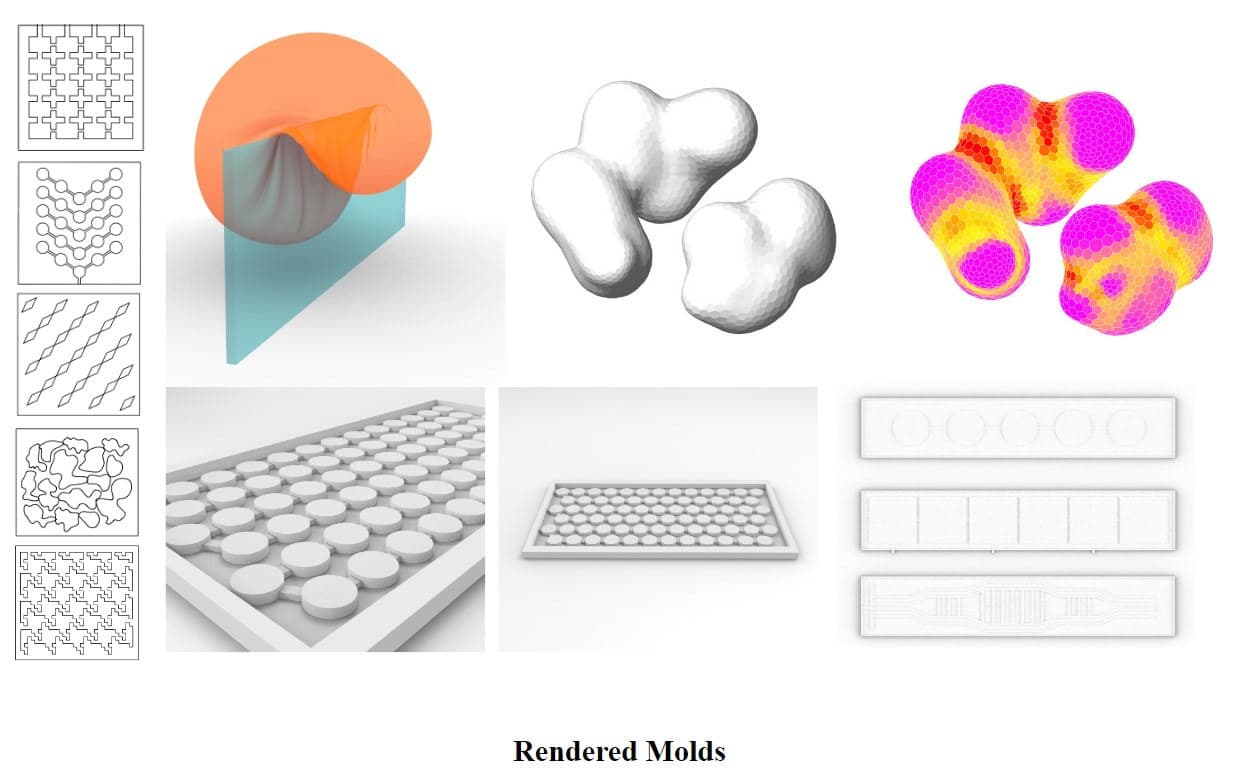
Fabrication went through many rounds of mold-making and casting. A chamber has to inflate quickly, hold its shape, and still feel gentle on skin.
We tested with 12 pairs of participants. One person touched a textile and described the feeling; the other wore TeleCon and described what the device rendered, using a shared list of descriptors. Comparing the two descriptions showed how close the device gets to transmitting a feeling.
Credits
- Team
- Joseph Wu, Vishal Vaidhyanathan, Hye Jun Youn, Aria Xiying Bao, Lillian Liu
- Context
- MIT MAS.834: Tangible Interfaces, Fall 2021
- Adviser
- Hiroshi Ishii
- Tools
- Silicone casting, Arduino, Unity, Grasshopper, Figma