VR for Spatial Design
Rethinking the design process and tools for architects through the lens of VR.
- Year
- 2021
- Role
- UX Designer
- Tags
- Virtual RealityArchitectureUIUX designHCI
Architects trust VR to show space. Why won't they design in it?
VR tells space, scale, and material better than any 2D screen, yet architects only pull it out for the final presentation. VR for Spatial Design is a five-month case study on why, ending in a tool where designers sketch, inspect, and modify their designs inside the headset.
Architects trust VR to show space. Why won't they design in it?
VR tells space, scale, and material better than any 2D screen, yet architects only pull it out for the final presentation. VR for Spatial Design is a five-month case study on why, ending in a tool where designers sketch, inspect, and modify their designs inside the headset.
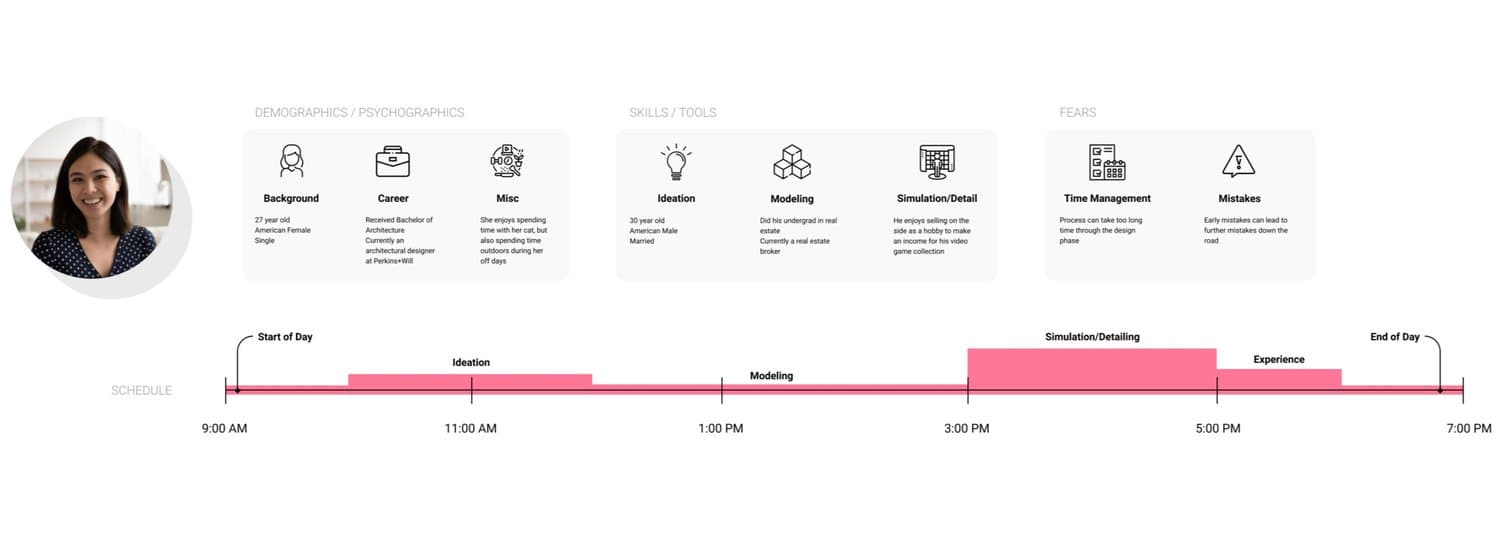
We started with the architect's day. Mapping demographics, psychographics, and a day-in-the-life schedule showed where the hours actually go and which pain points are worth solving.
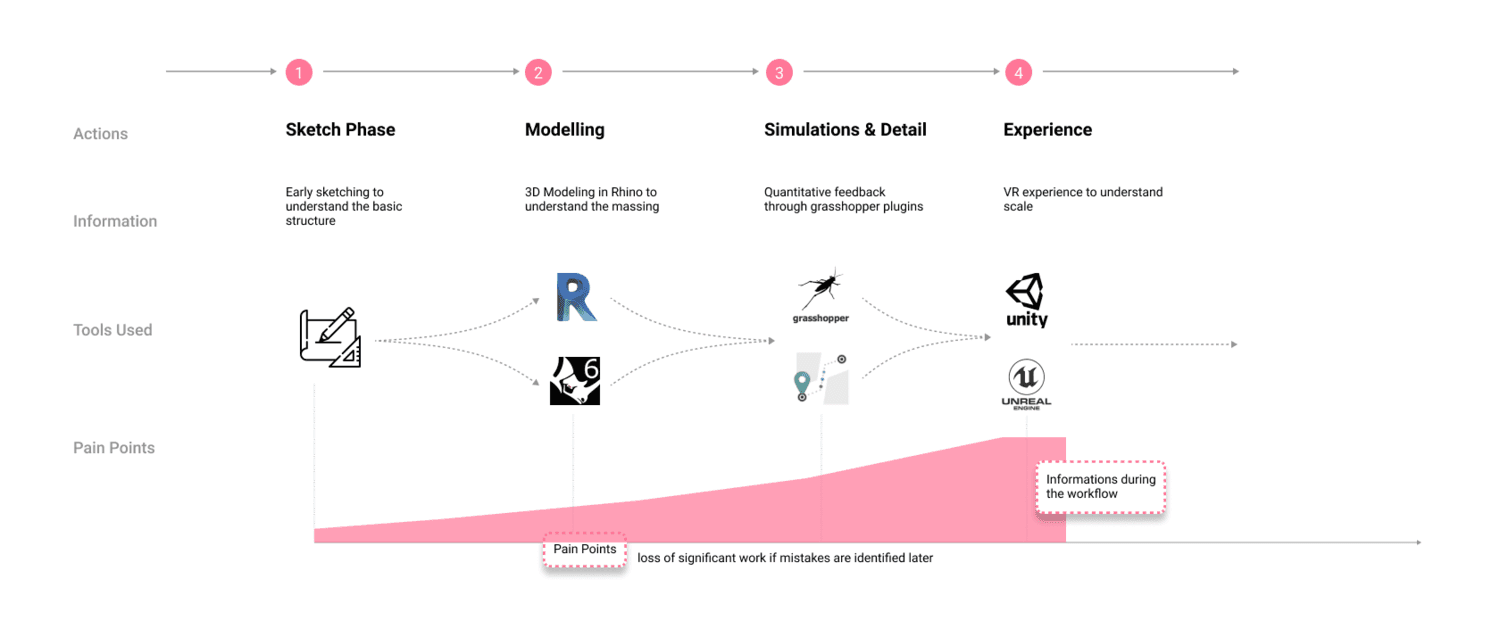
Working through the tools architects already use exposed the pipeline itself: every stage needs multiple tools and exports, and a mistake found late sends you back to the start.
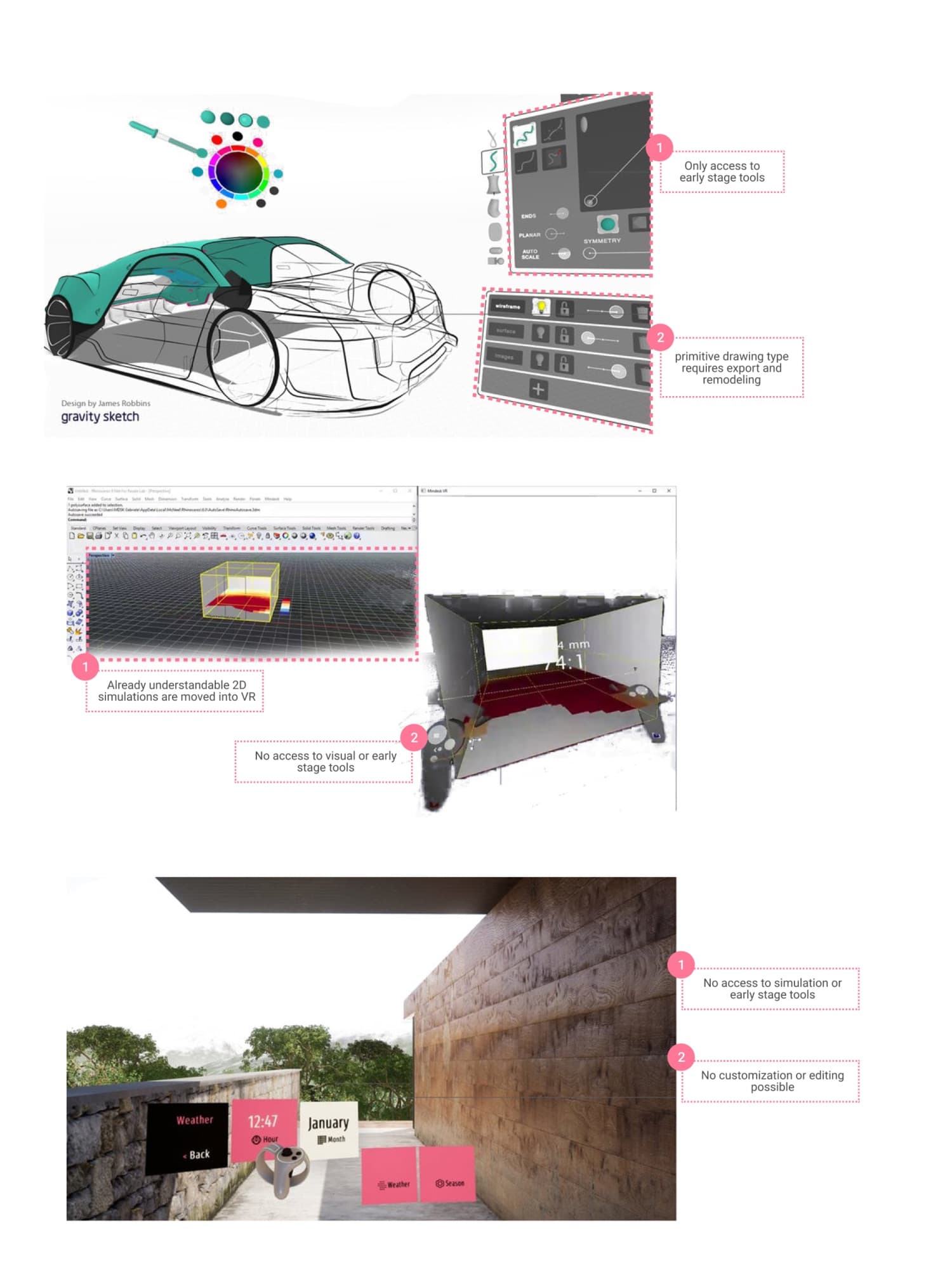
The journey map connected the complaints. VR editing is clumsy, every fix means another export and re-import, and simulations, the essential part of the process, don't live in VR at all. One architect summed it up: VR makes me import and export a million times if I see a mistake.
A feasibility matrix scored the candidate features. The winners shortened the pipeline and cut exports instead of rebuilding modeling features VR is bad at.
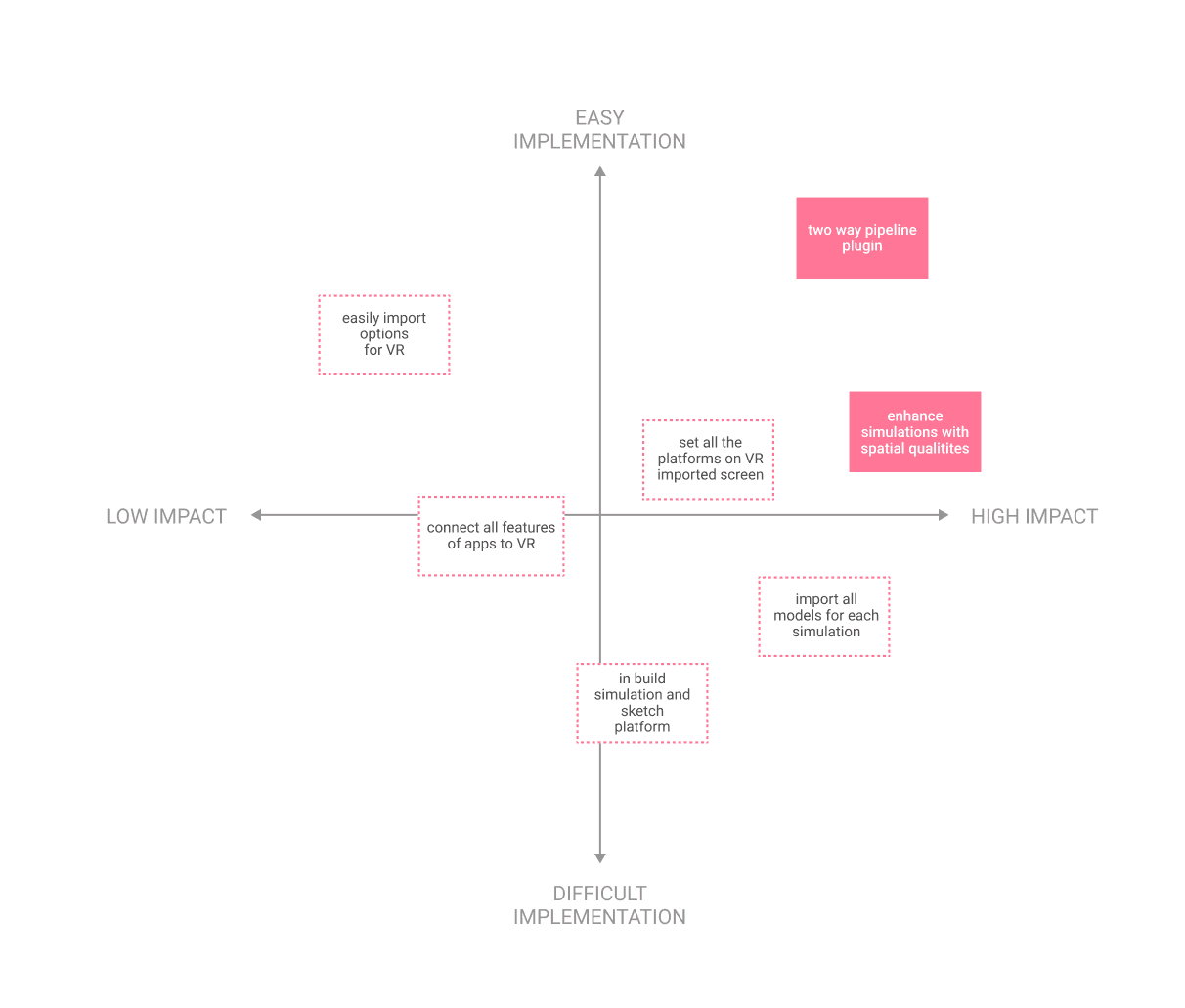
The decision: don't rebuild architecture tools in VR, connect them. A two-way pipeline moves models and simulations between the headset and existing simulation software, so each side does what it is good at.
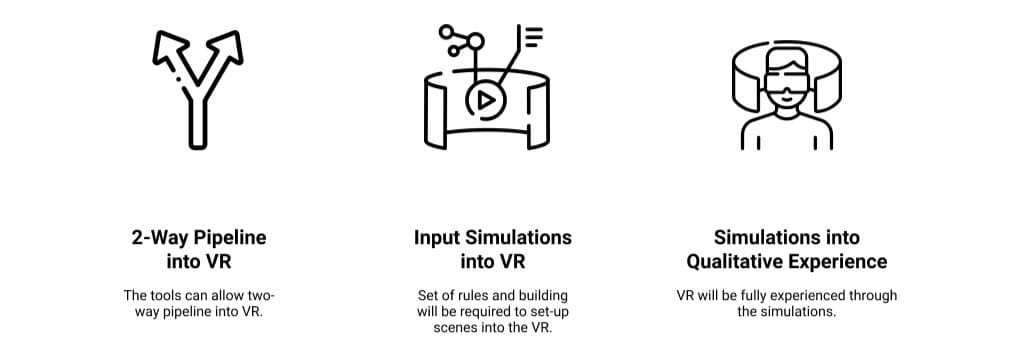
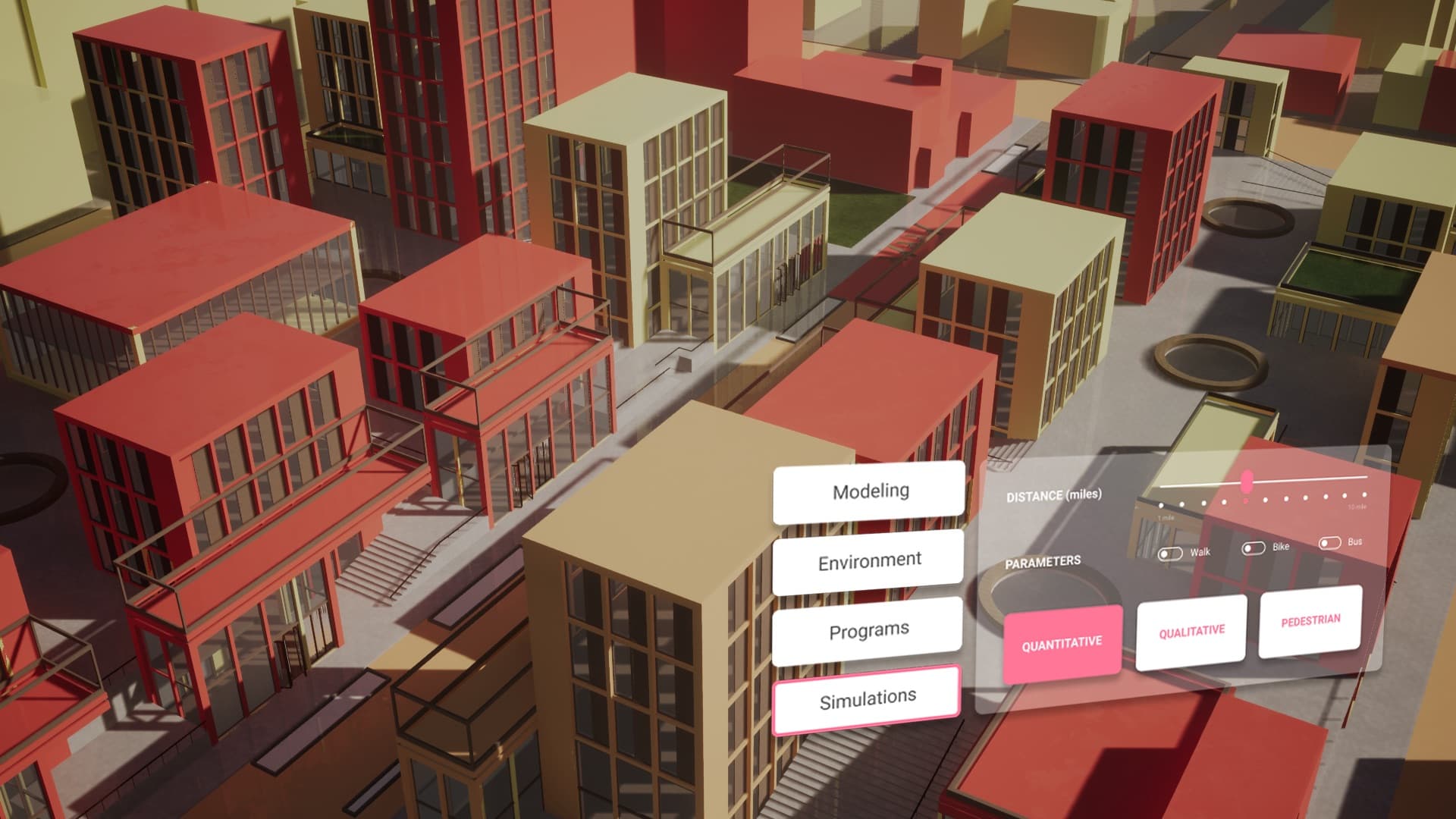
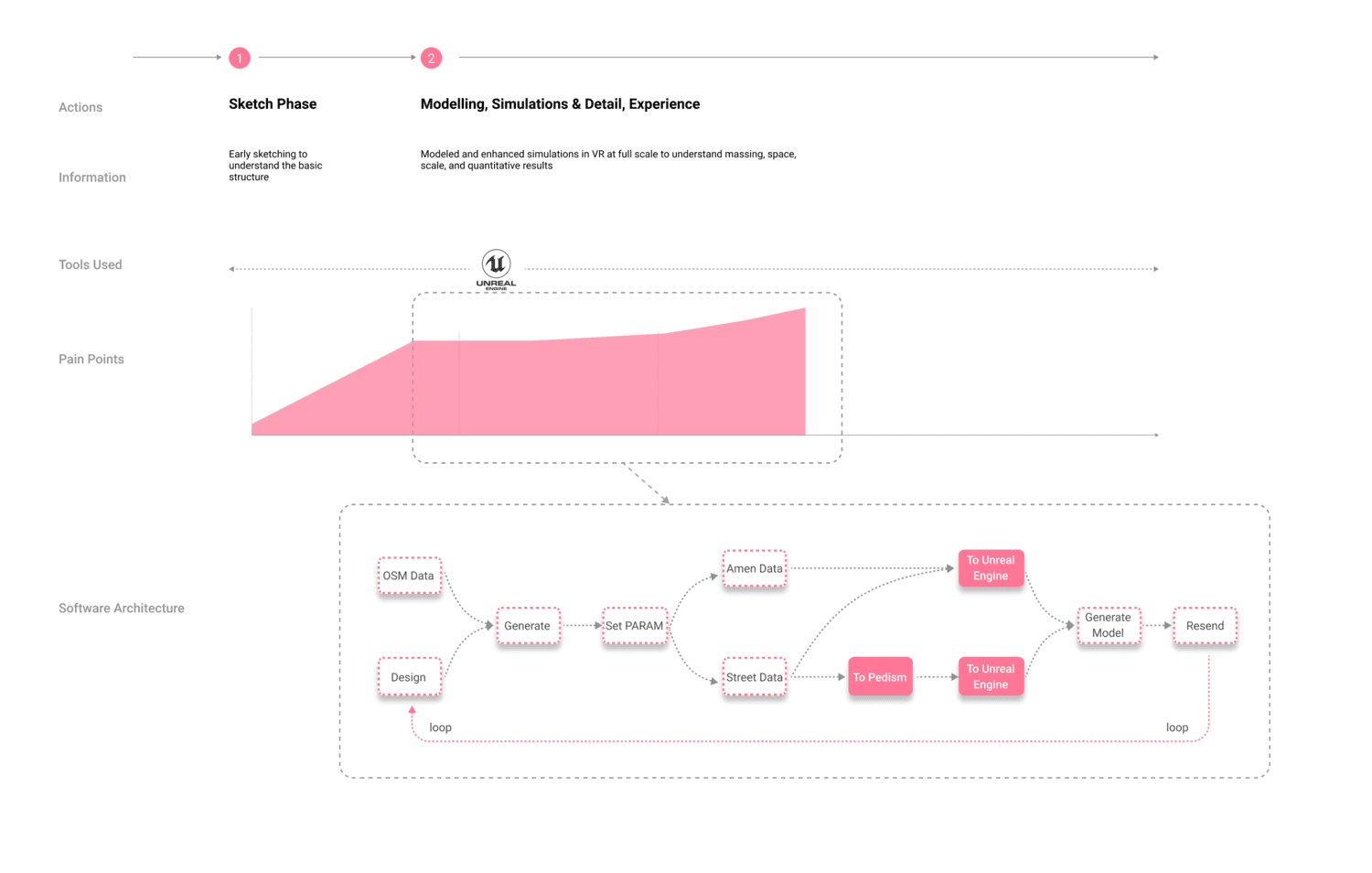
The new workflow keeps architects in VR through modeling, scale, and experience checks. Underneath, the system generates models from OSM and design data, runs street and amenity data through simulation, and loops the results back into Unreal Engine.
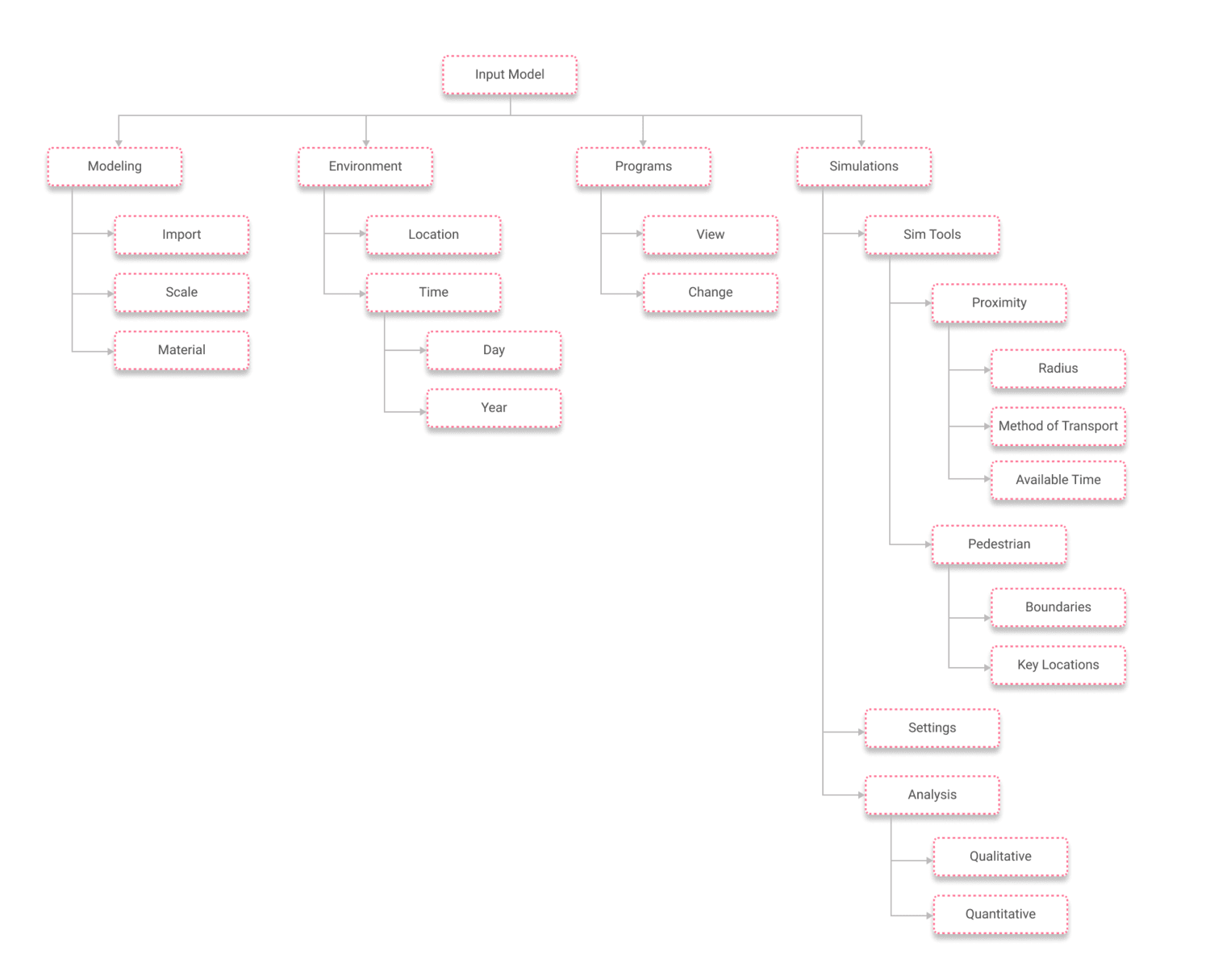
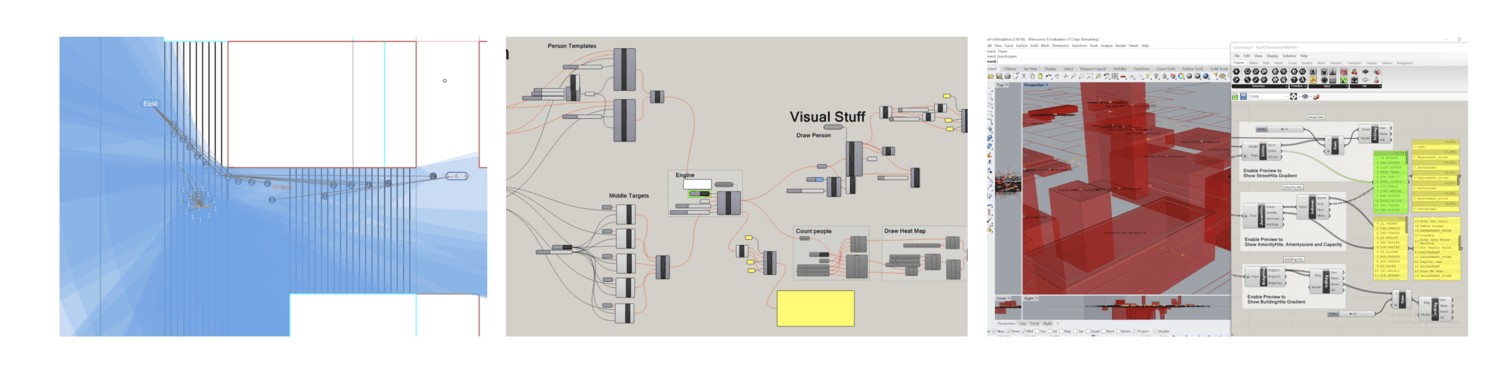
Current simulation interfaces bury results in complex setup: numbers and plots you read at a desk, far from the space they describe.
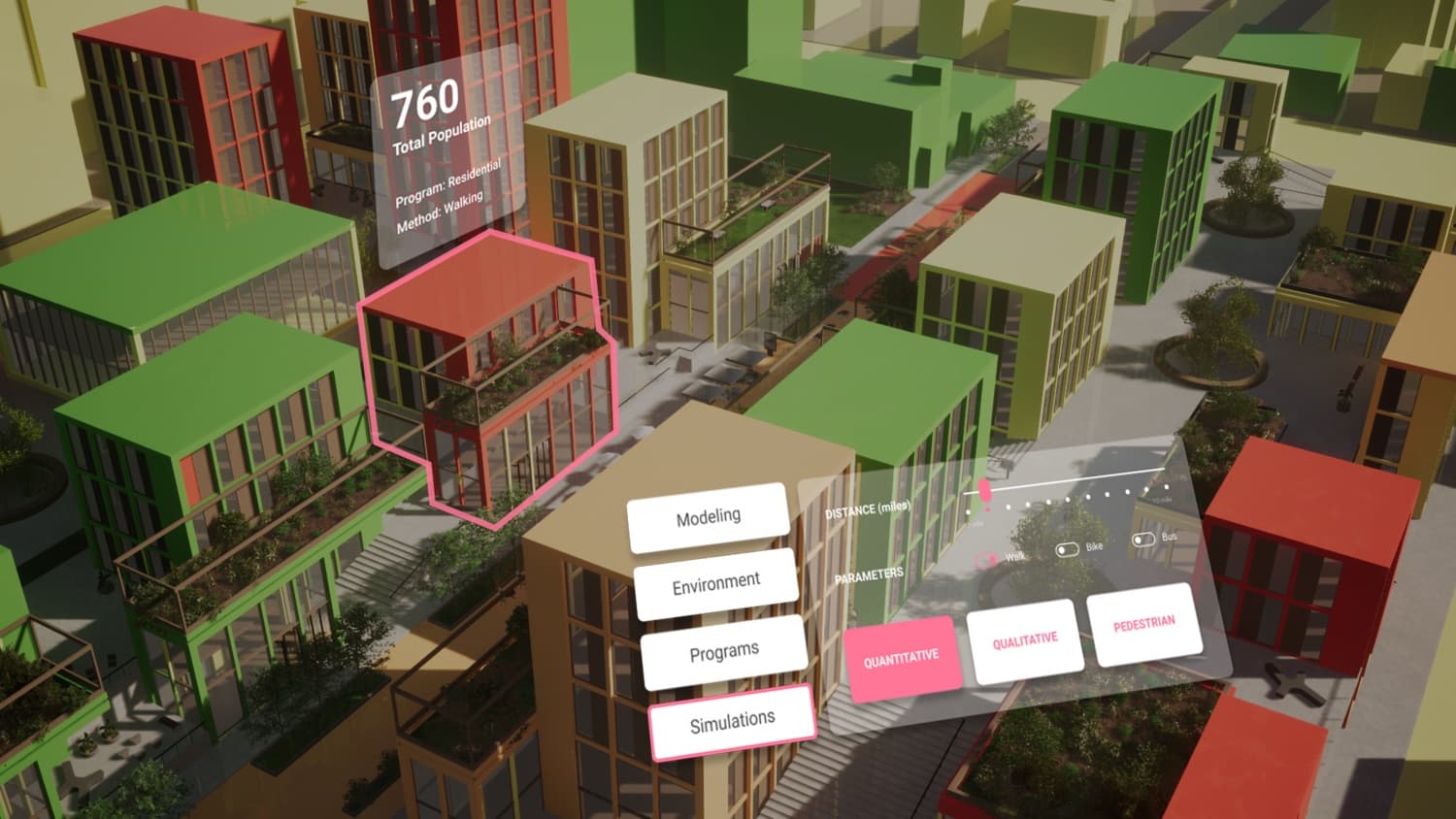
Our pipeline brings simulation results into VR with a click, at full scale, and lets you edit and re-simulate instantly instead of round-tripping between platforms.
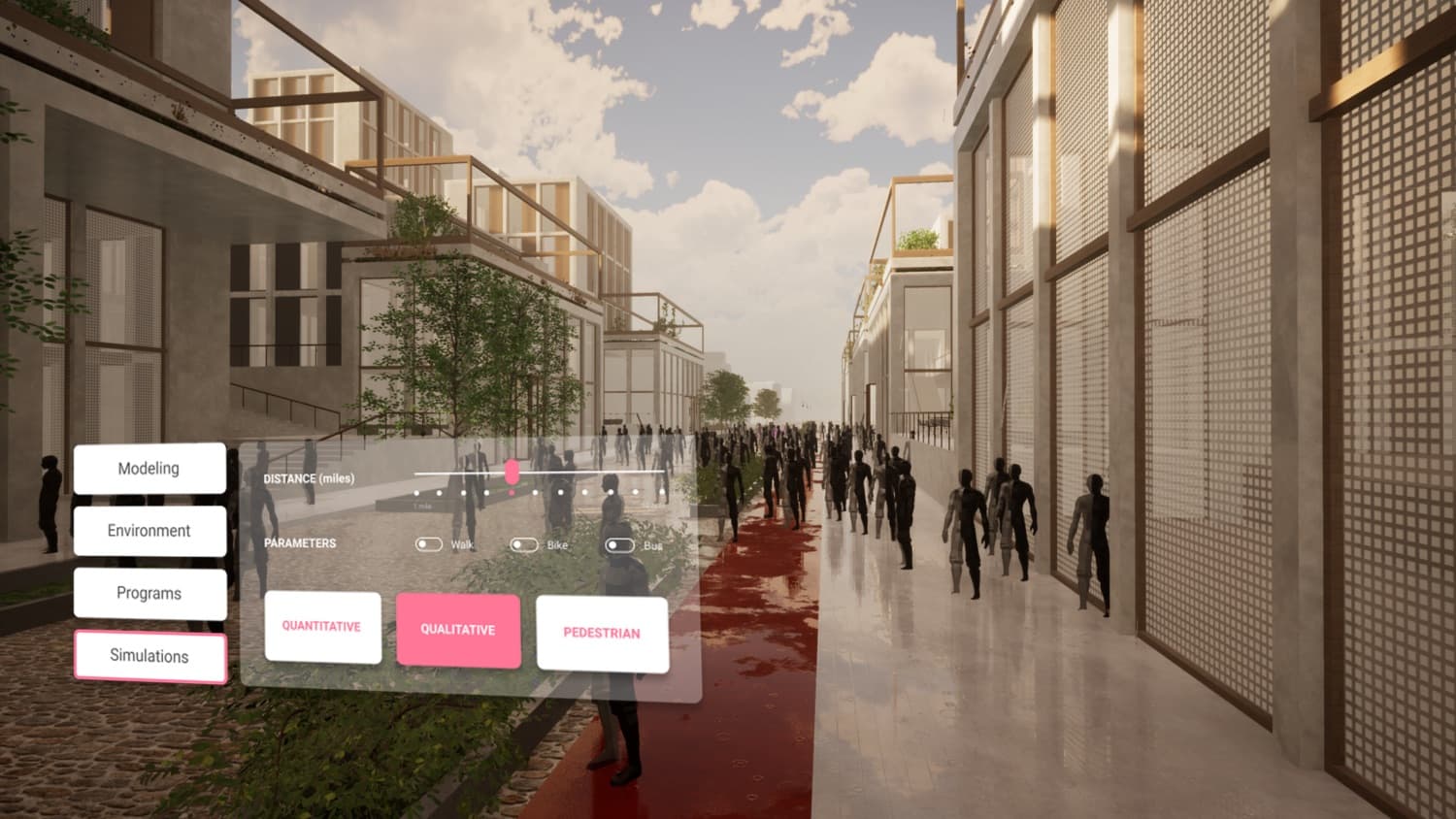
Simulations also render as full-scale figures in motion, so a pedestrian study reads as how the street would feel rather than a series of numbers.
Credits
- Team
- Kenny Kim, Aishwarya Sreenivas, Joseph Wu
- Duration
- August to December 2021 (5 months)
- Tools
- Unreal Engine