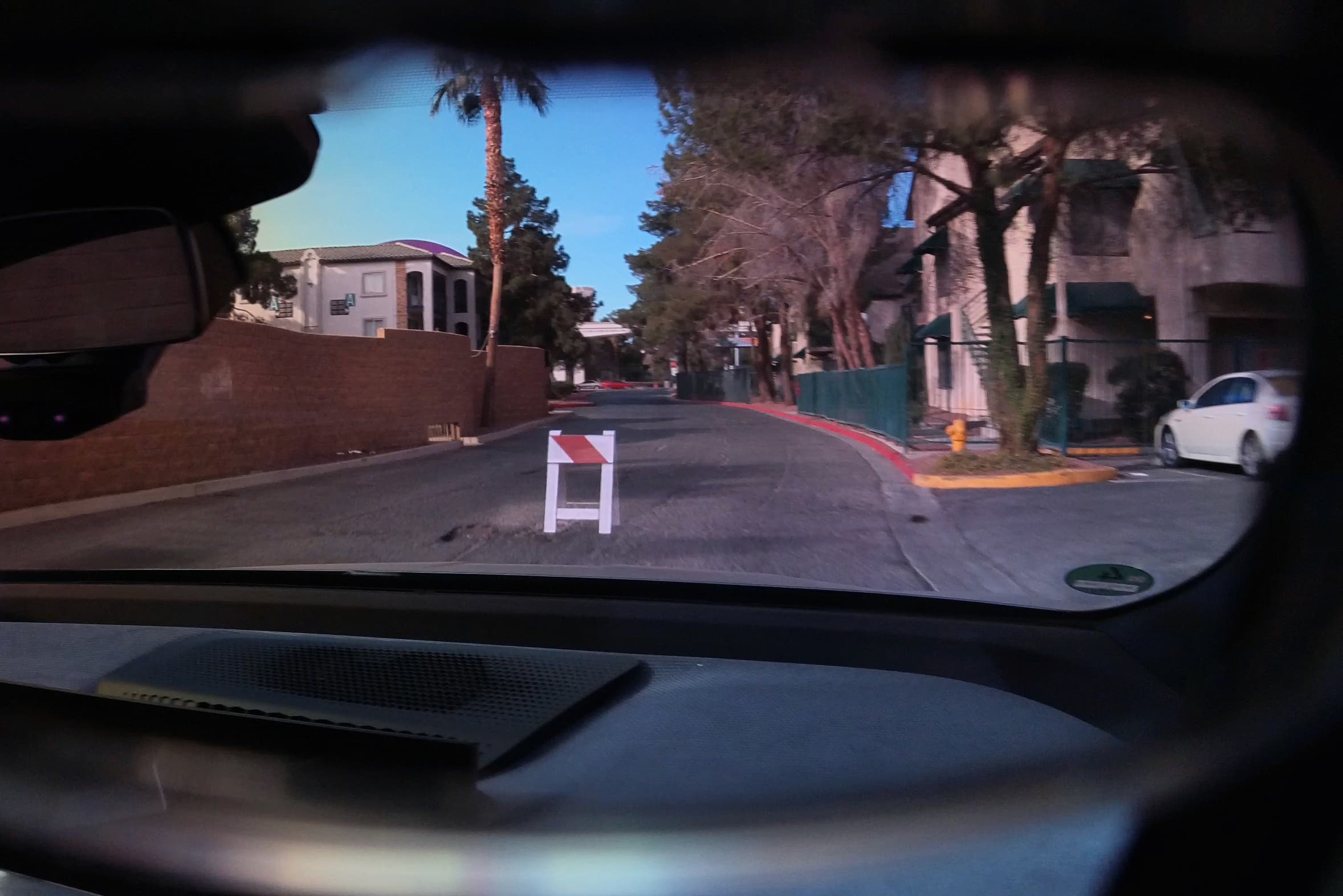
BMW AR Ride CES 2024
An in-car AR experience that keeps spatial content stable while the vehicle moves.
- Year
- 2024
- Role
- Software Prototyper
- Tags
- ResearchSpatial ComputingAR/VR
Designing AR that stays believable while the car is moving.
I worked with BMW's AR Research team to design and build in-car AR/VR use cases. The CES 2024 demo treated the car as a moving spatial computer, where navigation cues, interface objects, and entertainment all have to stay anchored instead of sliding across the windshield.
Designing AR that stays believable while the car is moving.
I worked with BMW's AR Research team to design and build in-car AR/VR use cases. The CES 2024 demo treated the car as a moving spatial computer, where navigation cues, interface objects, and entertainment all have to stay anchored instead of sliding across the windshield.
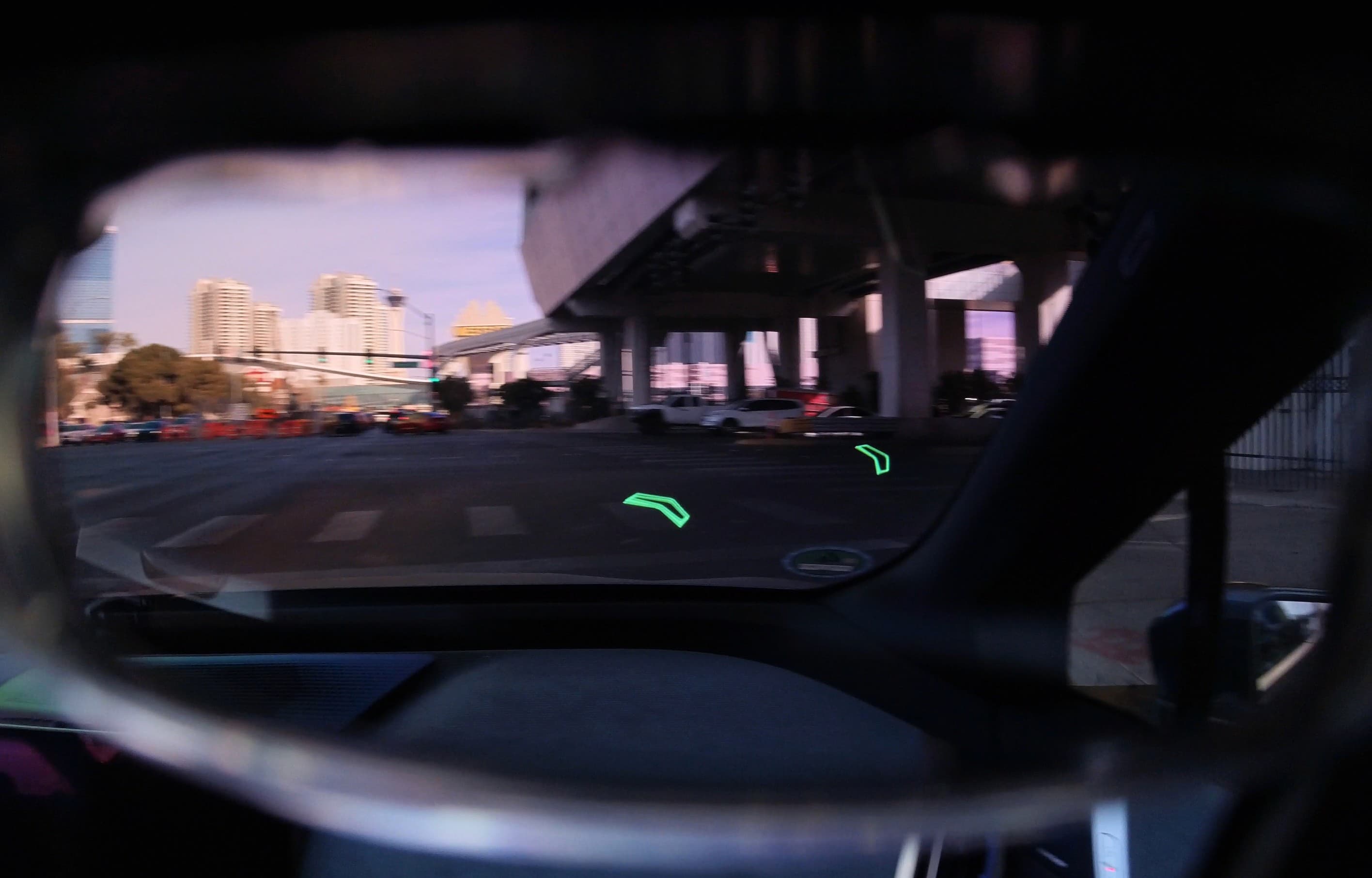
Early moments tested whether large spatial markers could sit outside the car and still read from the passenger seat. The design question was less about what to show than where content should live relative to the car and the world.
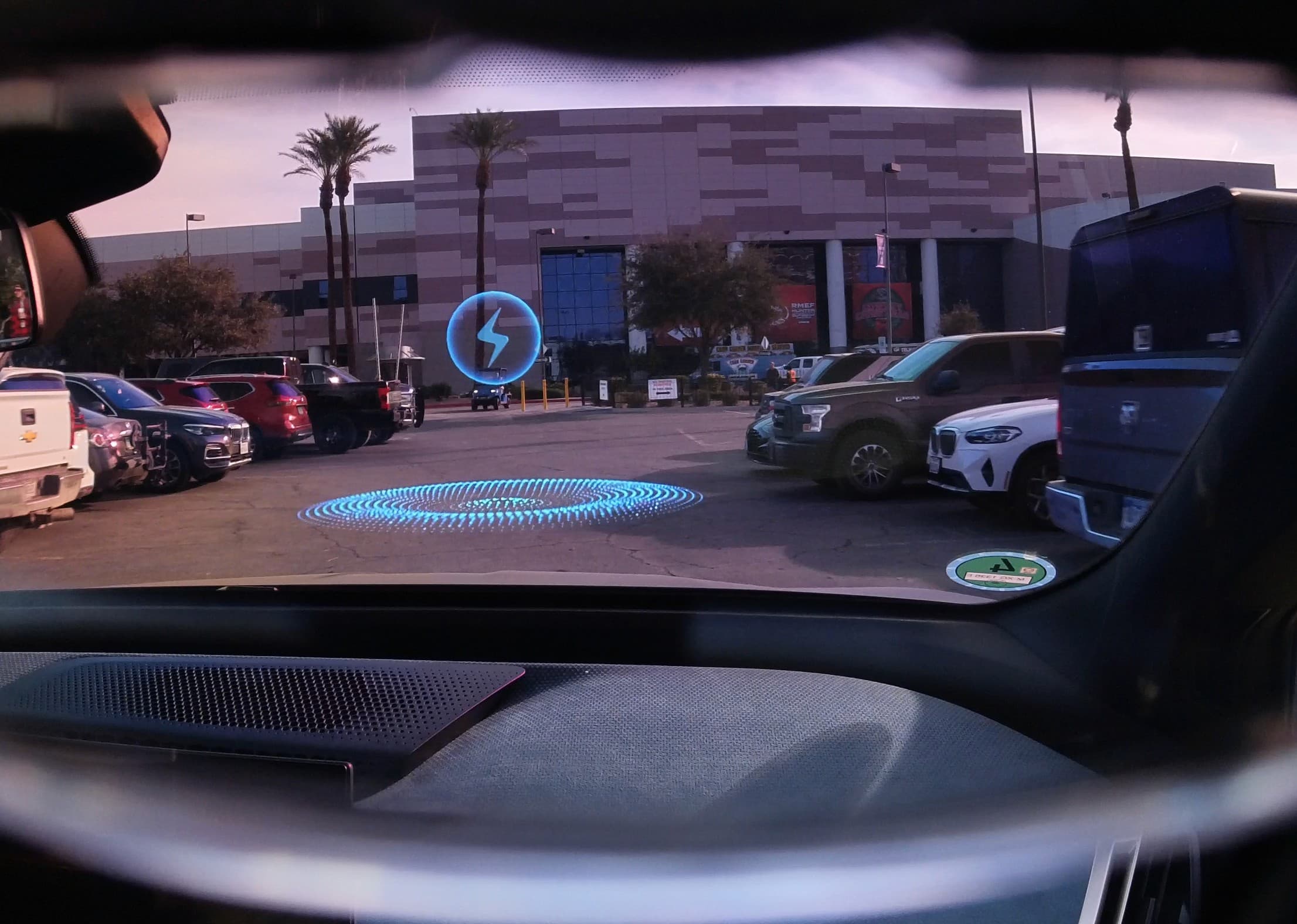
The same tracking layer carries lighter passenger surfaces: dashboard HUDs, simple game controls, and road-aware prompts that respond to what's outside.
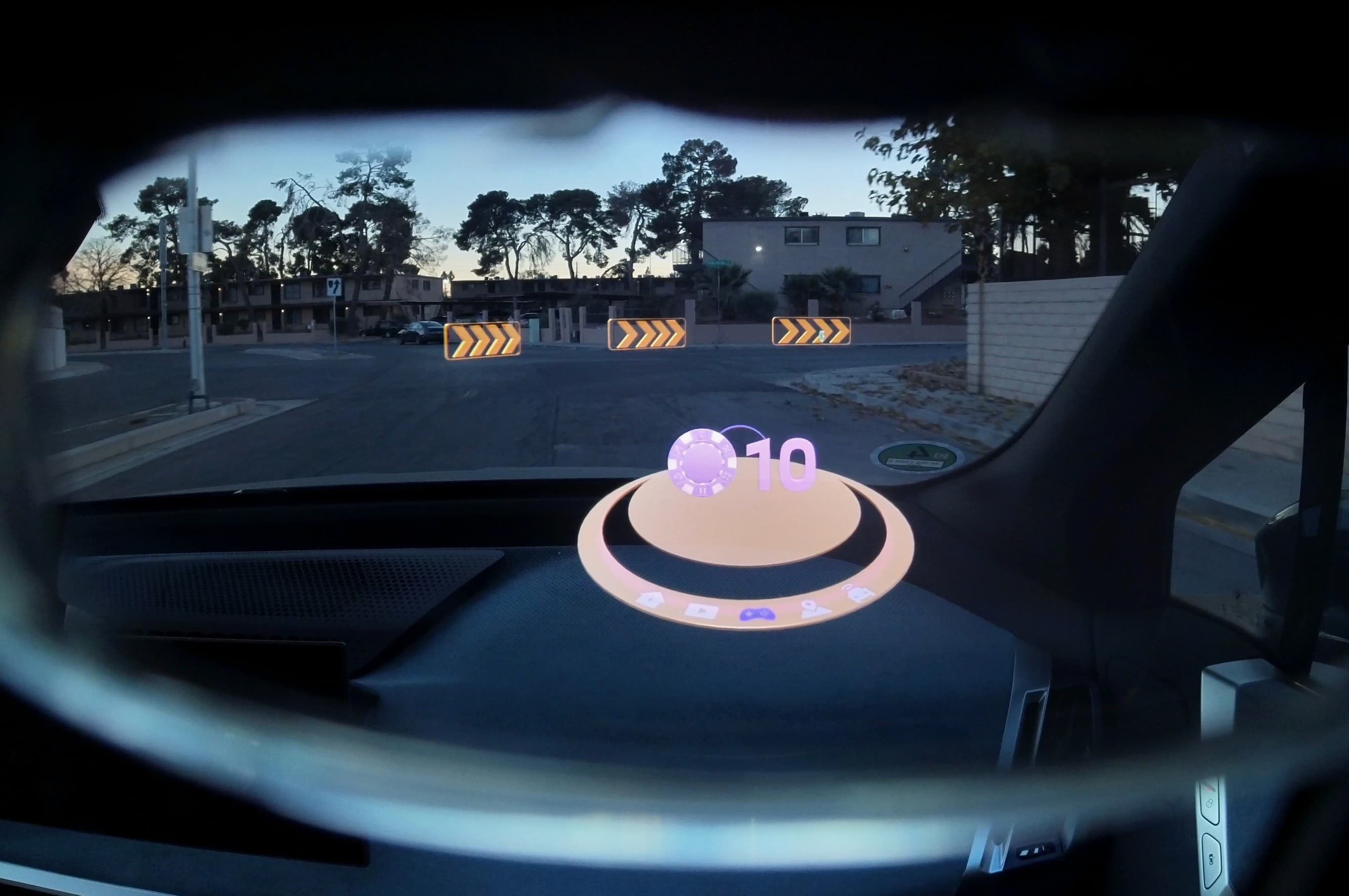
Navigation moved between world-locked cues and quick in-cabin controls. The XREAL sensor stack and the vehicle worked together, using interior camera tracking to place the glasses in 6DoF inside the car.
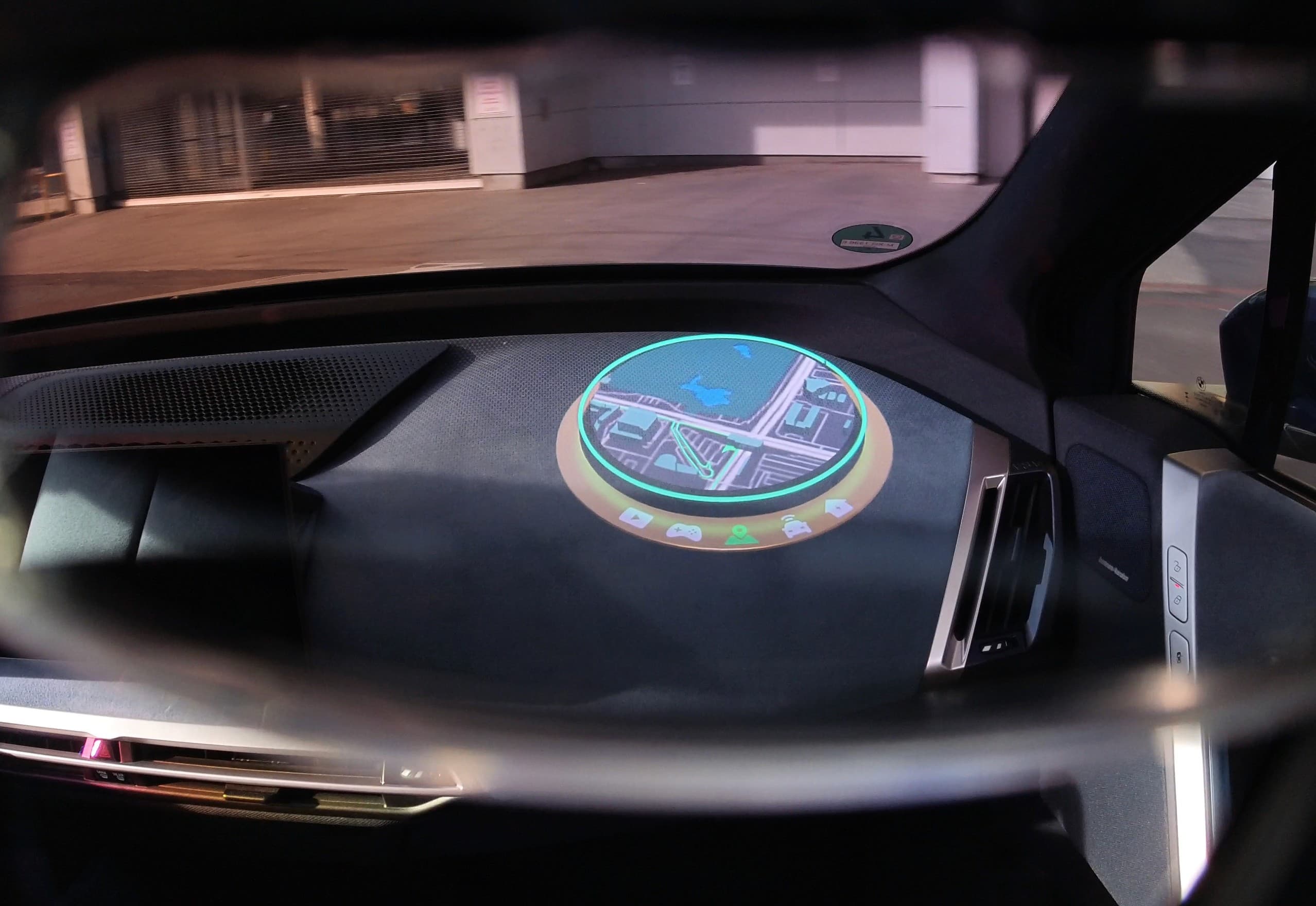
The hardest case is the empty frame: even with nothing on screen, the system still has to track the cabin, the road, and the glasses against each other. My job was to turn that research into a CES demo where the car, the glasses, and the interface behaved as one system.