Robotic 3D Printing
Large-scale 3D printing using a robotic arm.
- Year
- 2019
- Role
- Design engineering
- Tags
- Robotic ArmFabrication
Robotic 3D printing that treats transparent PLA as a material for shaping light.
This research treats printing as both fabrication and optics. A robotic arm extrudes transparent PLA at architectural scale, building layered surfaces that bend, catch, and scatter light.
Robotic 3D printing that treats transparent PLA as a material for shaping light.
This research treats printing as both fabrication and optics. A robotic arm extrudes transparent PLA at architectural scale, building layered surfaces that bend, catch, and scatter light.

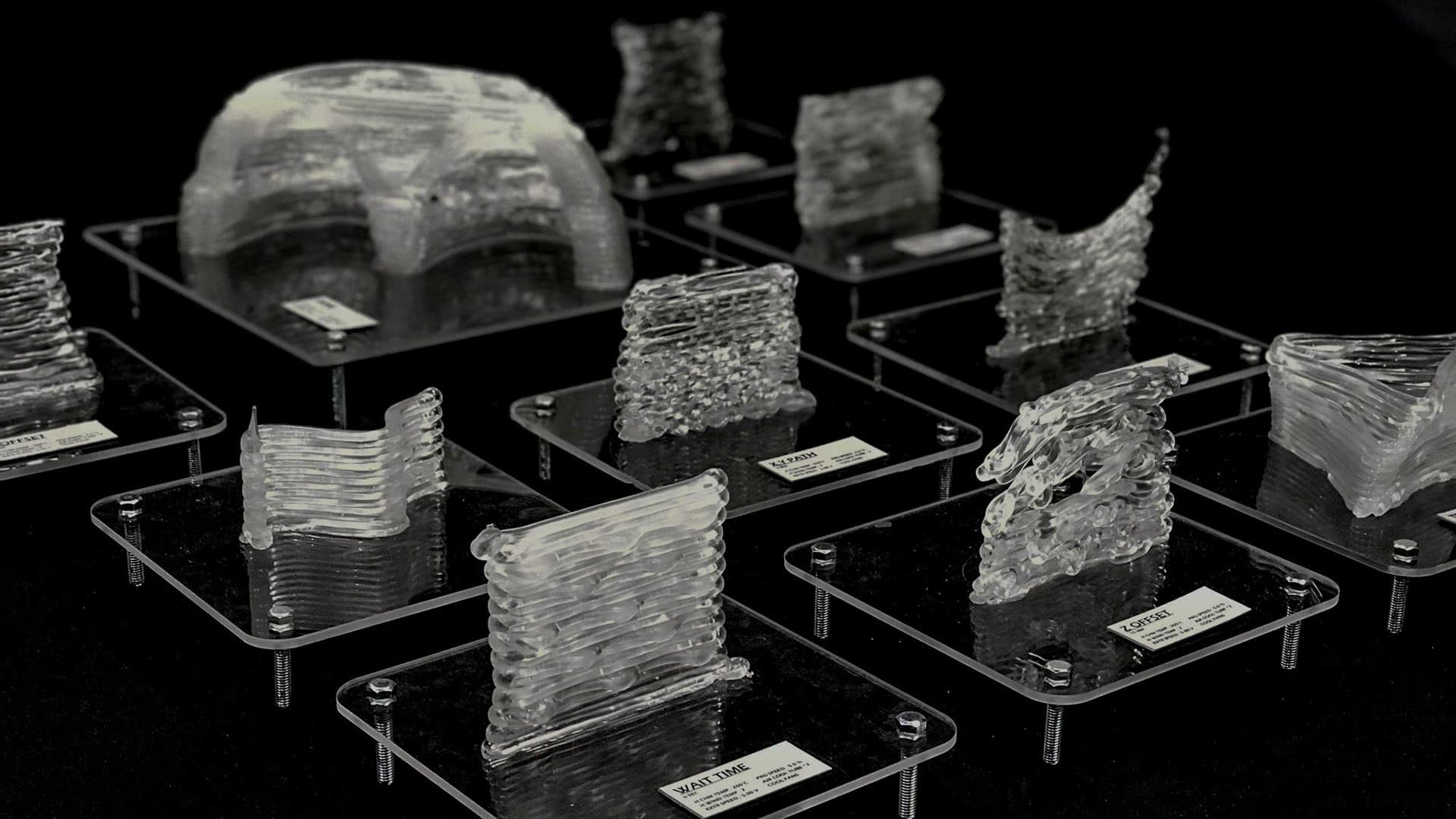
The study compared samples across paths, densities, layer heights, and curvatures. Each one behaves differently under light, which makes the print settings themselves the optical variables.
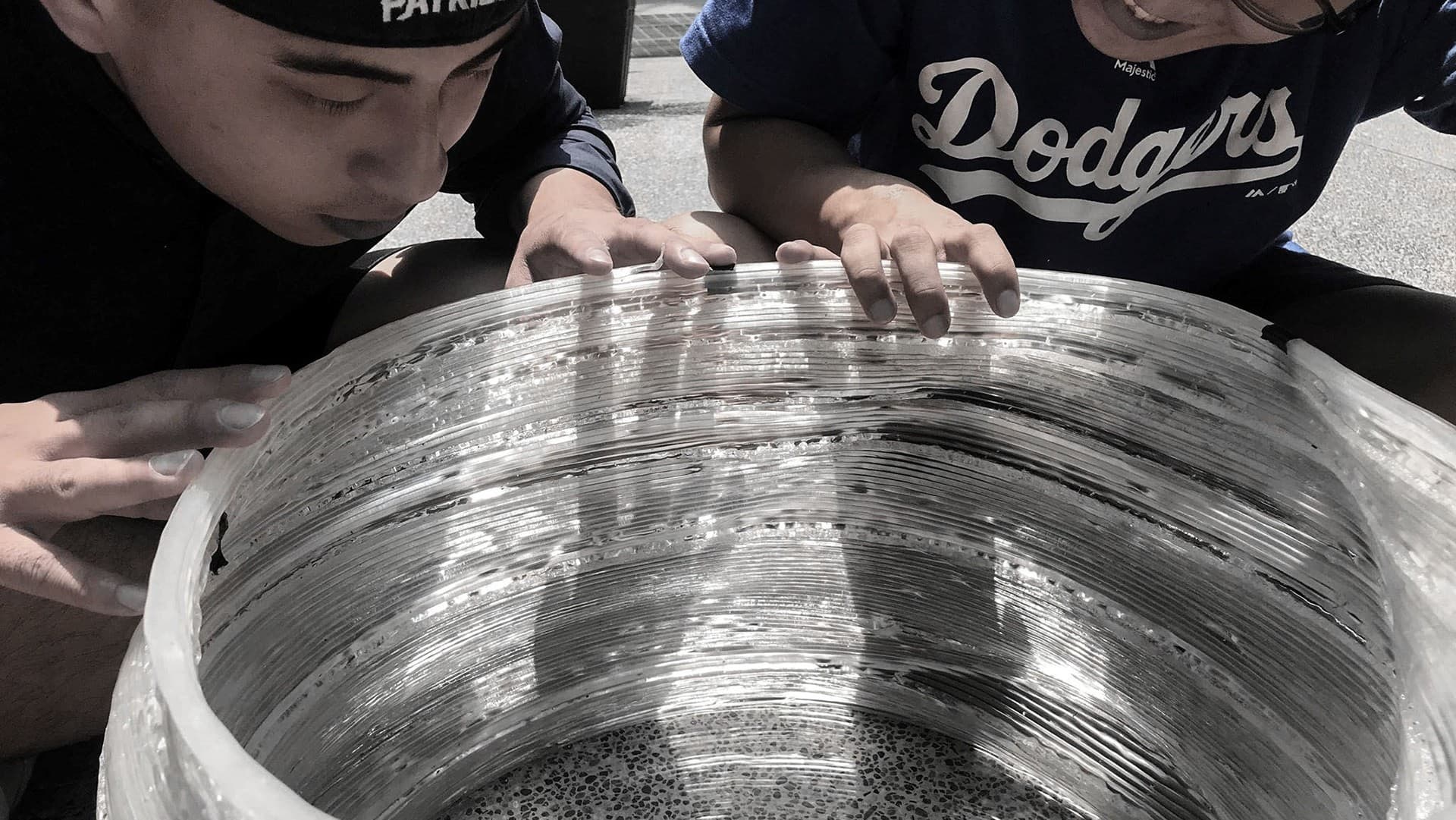
Scaled up, the effect becomes spatial. The transparent layers stop reading as test pieces and start to form a ring of refraction and shadow you can stand inside.

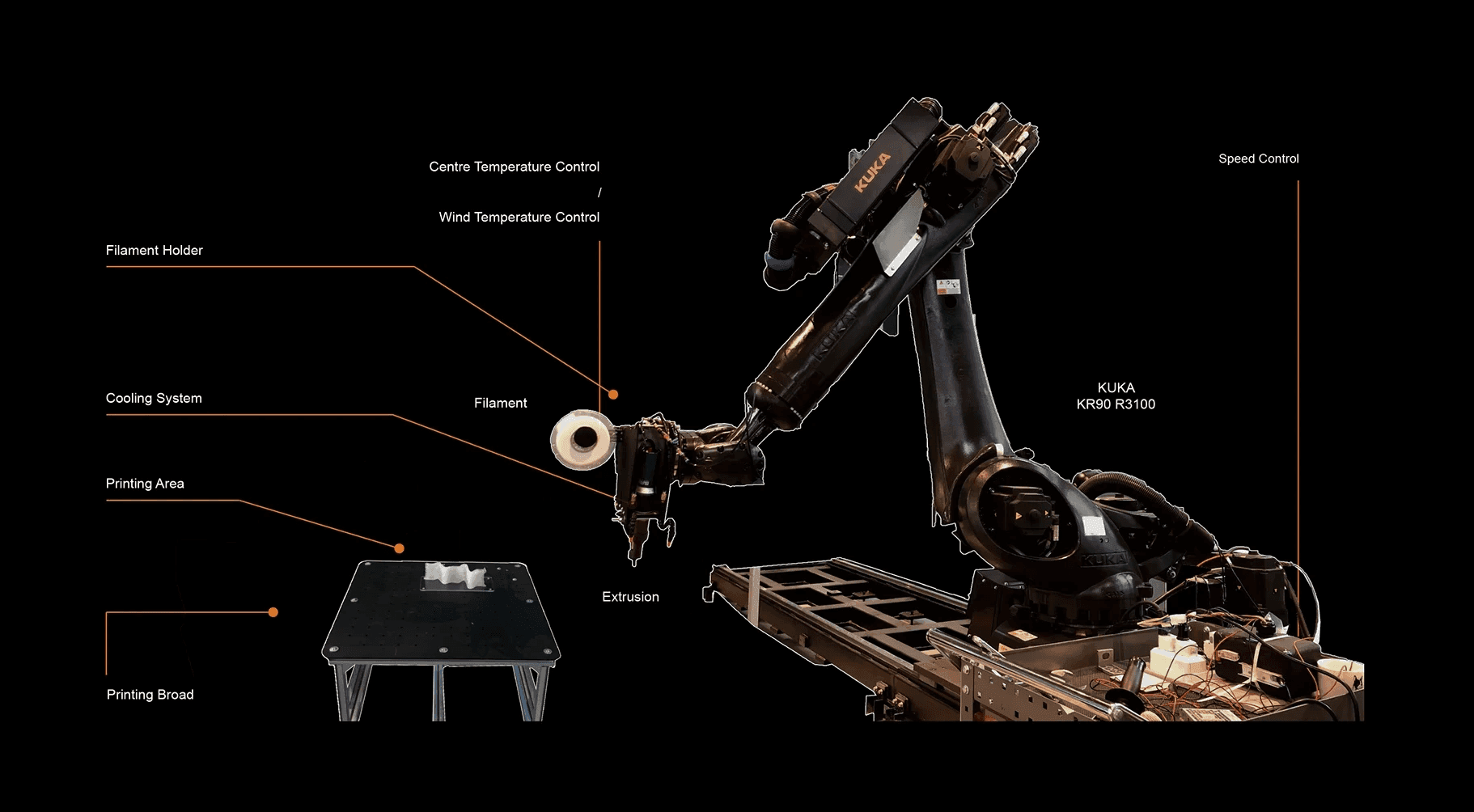
The system ran on a KUKA KR90 R3100 arm with extrusion, temperature, and cooling controls over a fixed print board. Speed, heat, and filament behavior all showed up in the final surface.
Inspection was part of the work: we checked layer quality, transparency, and how each imperfection changed the way light moved through the form.
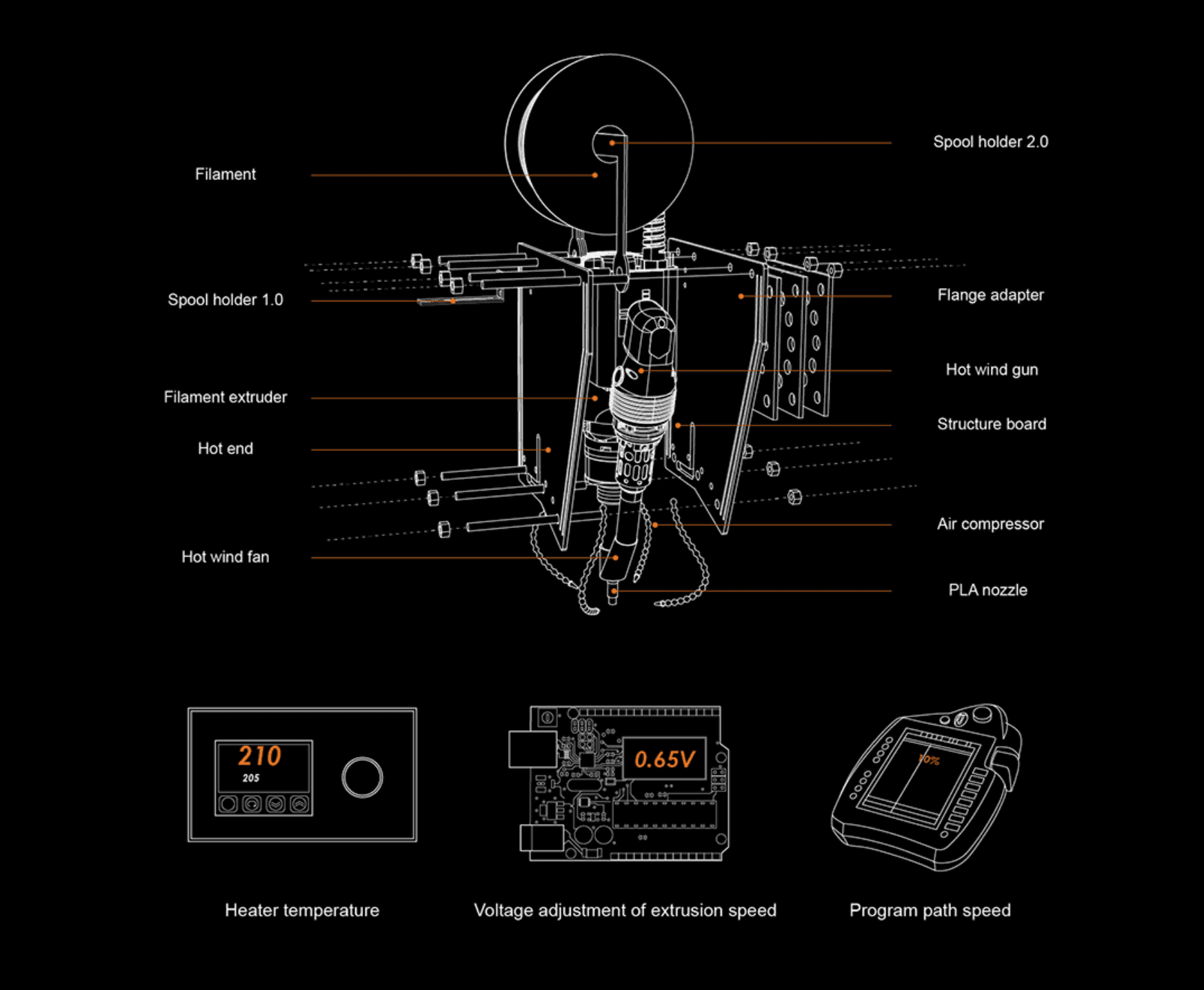
We also built the end-effector itself: spool holder, extruder, hot end, fan, flange adapter, compressor, and PLA nozzle. The next step is taking the material findings into custom light performances.