ROSO Plastering Robot
A construction robot for interior wall and ceiling finishing.
- Year
- 2024
- Role
- Computational Geometry Engineer, Robotic Software Engineer
- Tags
- Construction RoboticsRobotic ArmComputational GeometryPath Planning
Computational geometry and robotic software for interior walls and ceilings.
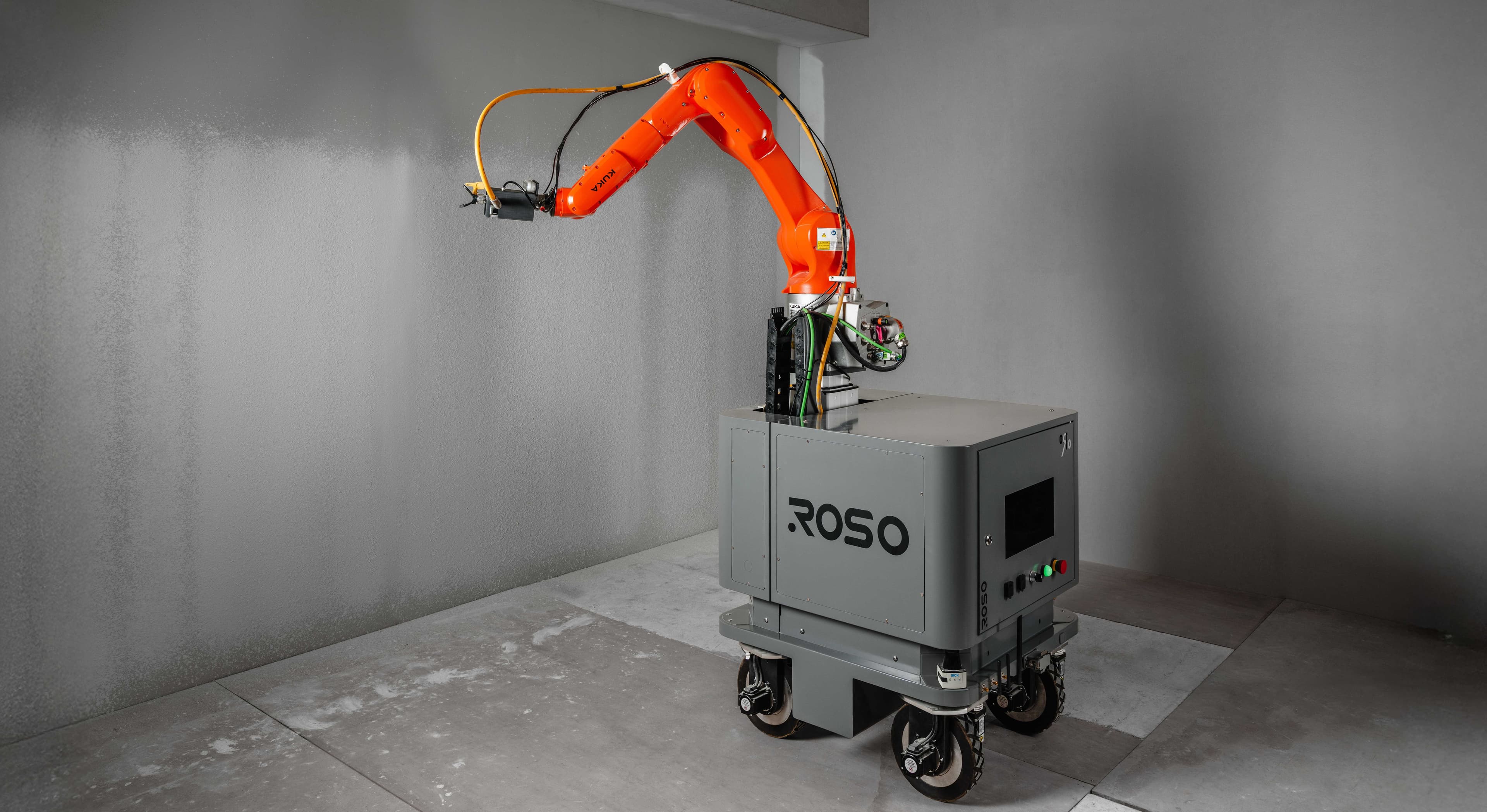
This case study stays intentionally high-level. The work sat around a mobile robotic arm for plastering and painting workflows: reconstructing the surface from scan data, generating toolpaths that cover it cleanly, and driving the arm along them on real jobsites. The images here come from ROSO's public construction-product page.
Computational geometry and robotic software for interior walls and ceilings.
This case study stays intentionally high-level. The work sat around a mobile robotic arm for plastering and painting workflows: reconstructing the surface from scan data, generating toolpaths that cover it cleanly, and driving the arm along them on real jobsites. The images here come from ROSO's public construction-product page.
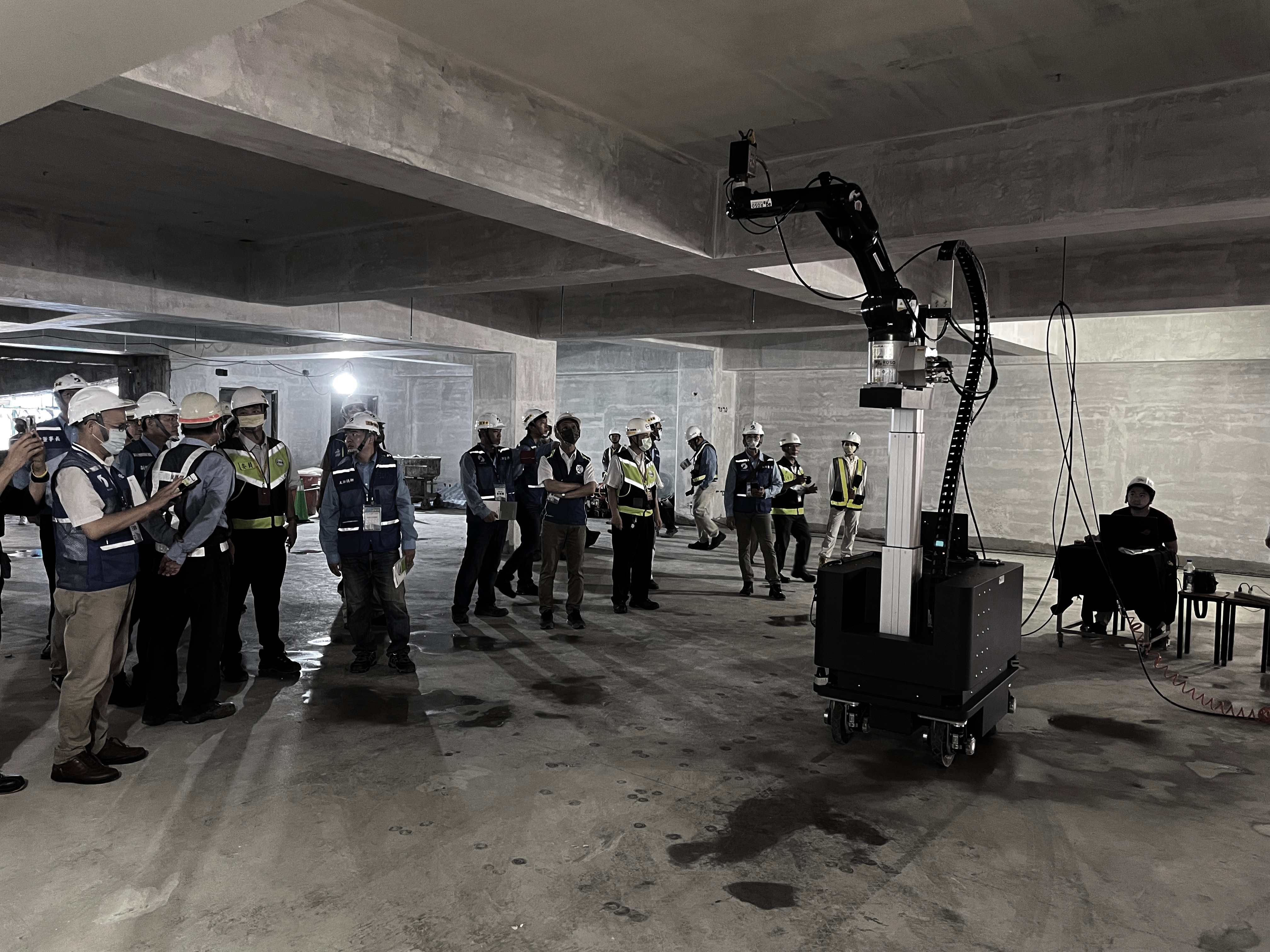
The core engineering problem was translating a scanned surface into a robotic toolpath: parameterizing the wall, laying down passes that respect edges and ceiling transitions, and keeping spray overlap consistent so coverage came out even. The public page describes the robot as an autonomous construction system for indoor painting; this write-up stays at that level.
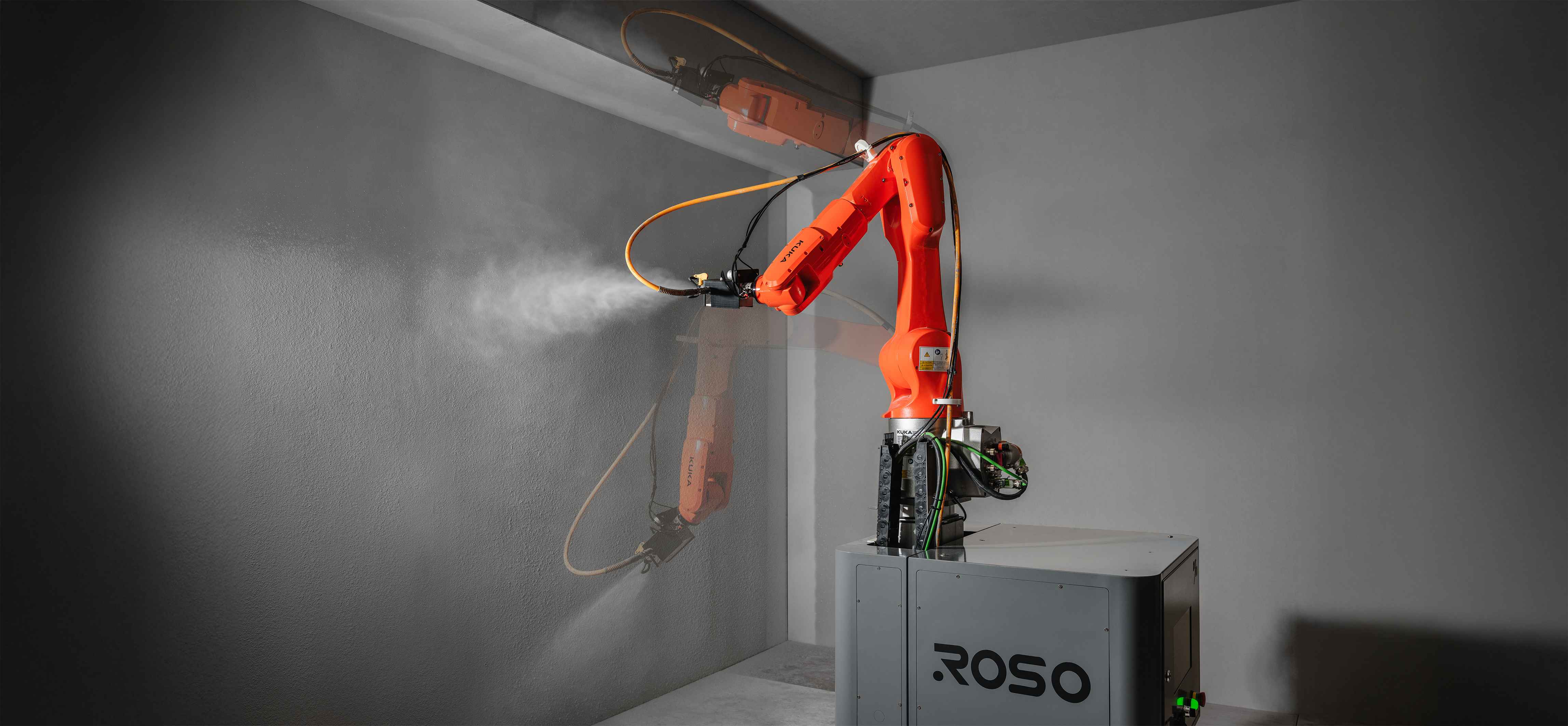
Real construction sites are not clean lab scenes. The software had to handle noisy scans, unfinished surfaces, cables, material staging, and changing lighting — with reach limits, singularities, and collision volumes narrowing what the arm could actually execute. The private control logic is omitted here.
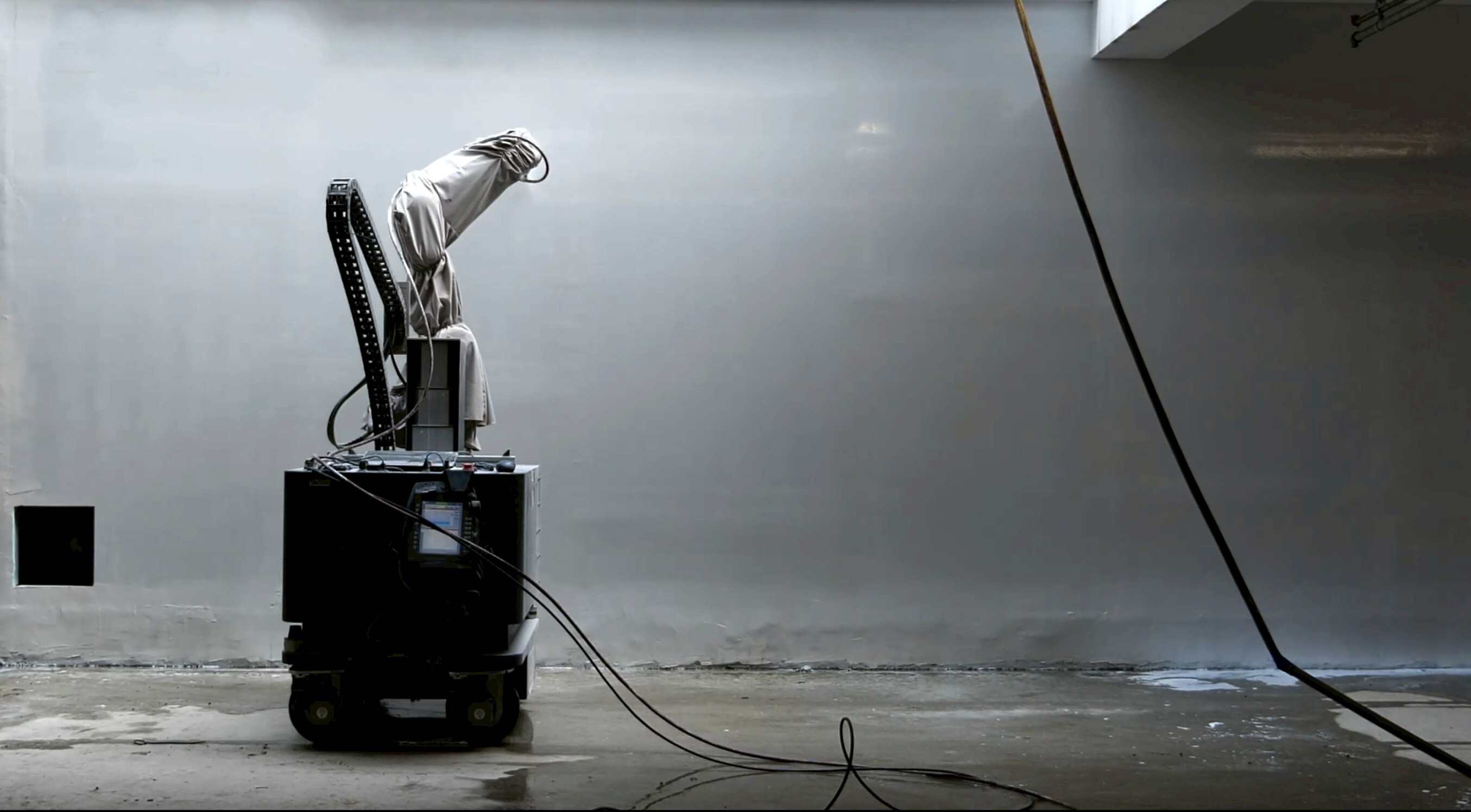
ROSO's public product materials emphasize environment scanning, robotic path planning, positioning reliability, and BIM-to-robot workflows. Those are the same technical themes the software work sat inside: turning a captured environment into a plan the arm can execute repeatably on-site.
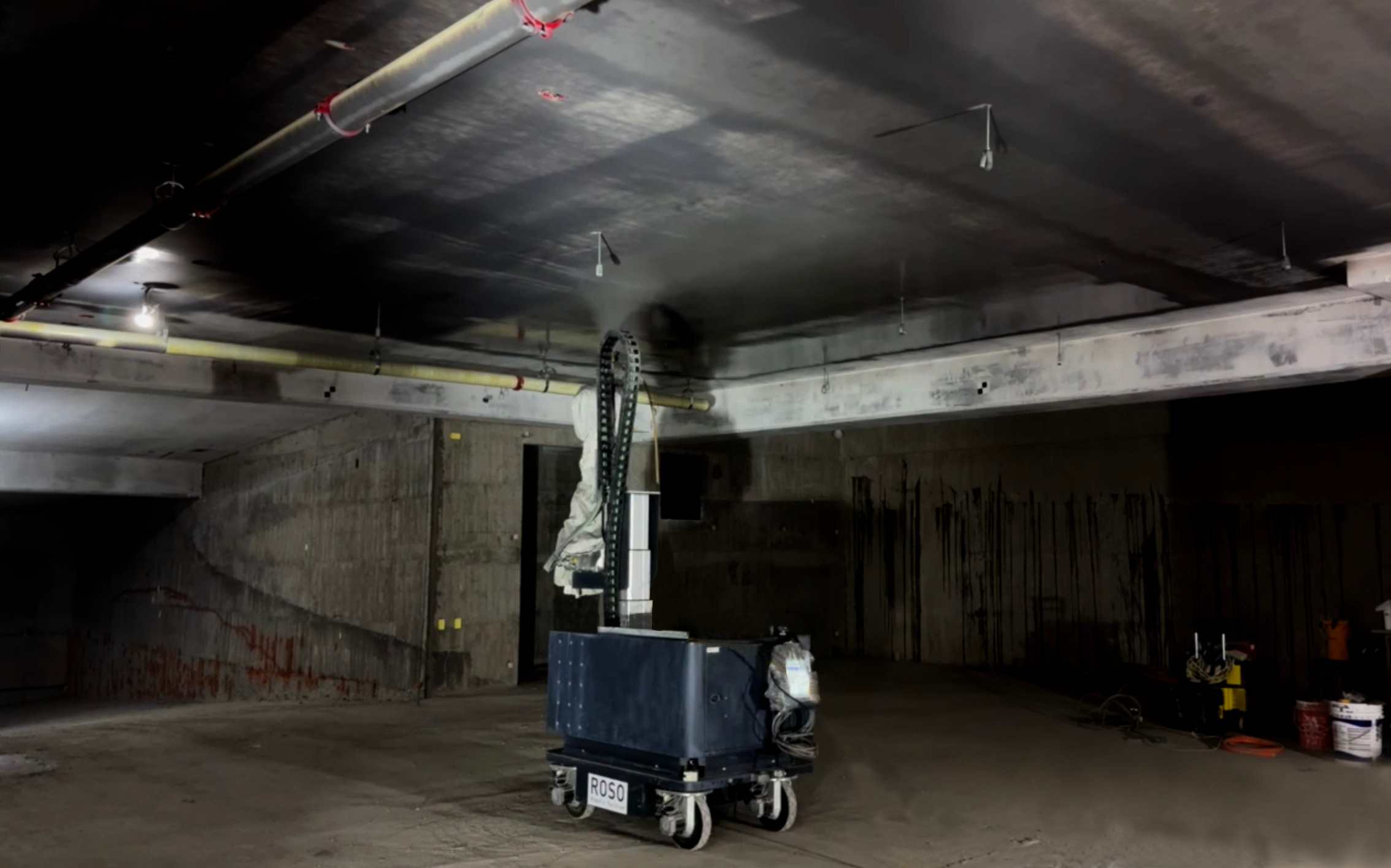
Full autonomy is not the interesting part. What matters is that the software exposes finished area, remaining path, and safe pause points clearly enough that an operator can supervise, correct, and resume without fighting the robot. That is the part this public version can safely communicate.
Credits
- Context
- ROSO construction robotics engineering work
- Confidentiality
- Private project details omitted; page uses public ROSO assets
- Public themes
- Computational geometry, robotic path planning, environment scanning, BIM-to-robot workflows