---
title: Anthroposense - Joseph Wu
site: Joseph Wu
site_url: wujoseph.com
description: Anthroposense is an innovative framework integrating LLMs, digital twins, and VR gamification to promote climate awareness through spatial reconfiguration and real-time carbon scoring.
page_type: landing
url: https://wujoseph.com/work/anthroposense
date_modified: 2024-05-22
---

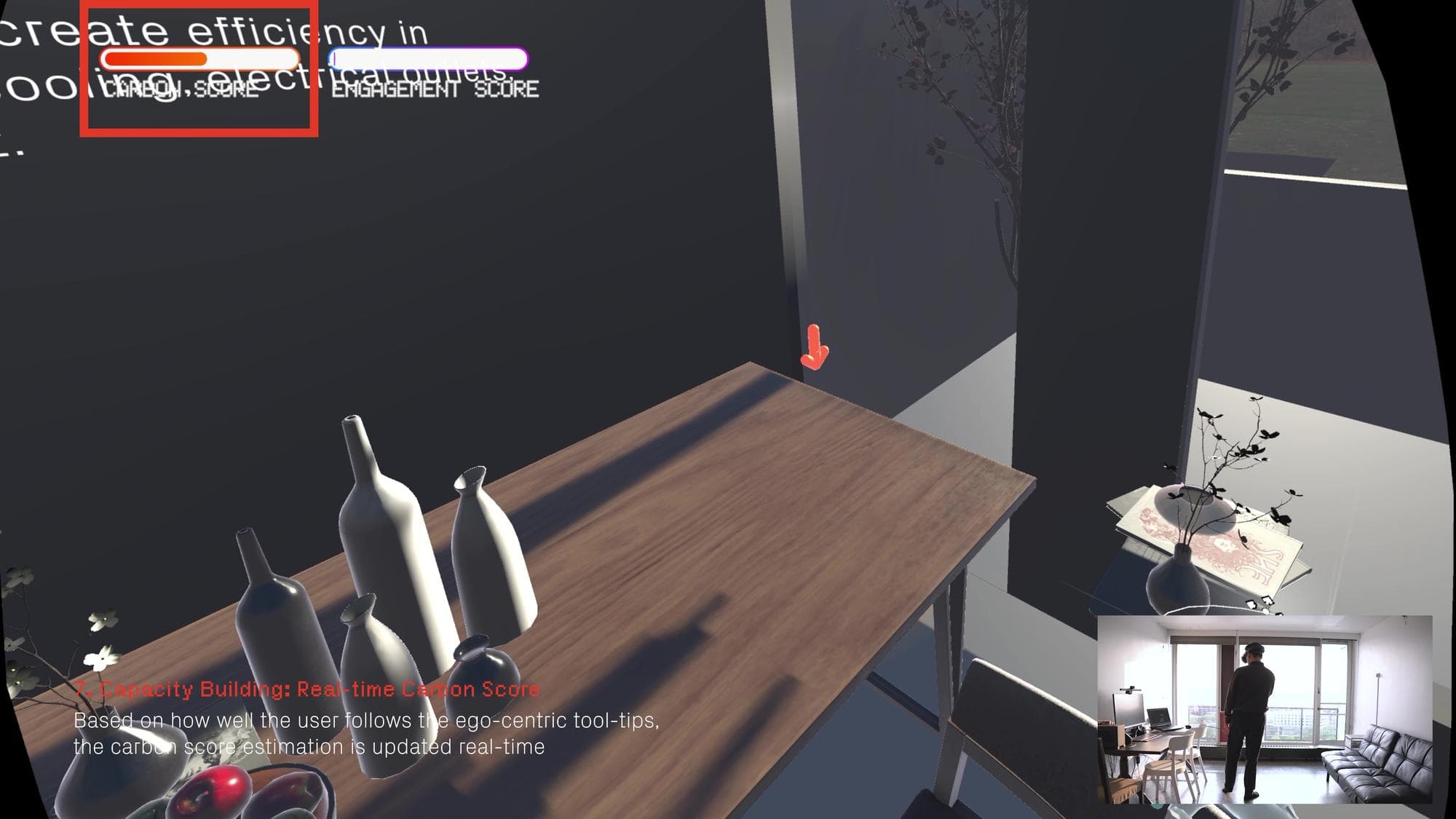
> Anthroposense is a cutting-edge framework that integrates Large Language Models (LLMs), digital twins, and VR gamification to transform climate awareness into actionable spatial design. By utilizing 3D scanning technology to create a digital twin of a user's actual room, the system provides real-time carbon scores based on furniture arrangements. Built on a robust tech stack including Oculus, Microsoft MRTK, and Unity, the app enables interactive spatial reconfiguration via intuitive pinch-and-release VR actions. Users can optimize their living spaces for energy efficiency and share their climate scores directly via social media API integrations.

# Anthroposense

"Anthroposense" is a framework that integrates Large Language Models (LLMs), digital twins, and VR gamification to explore climate change challenges in the Anthropocene. This system transforms environmental awareness into tangible action by utilizing immersive technology to facilitate spatial reconfiguration.

The Anthroposense interactive app enables spatial reconfiguration through the following features:

*   **Digital Furniture Arrangement:** Users digitally arrange furniture based on optimal climate scenarios.
*   **Immersive Awareness:** The platform fosters climate awareness through immersive experiences.
*   **Awareness into Action:** The framework is designed to transform climate awareness into direct action.

## Team

Kenny Kim
Vishal Vaidhyanathan

### User Journey

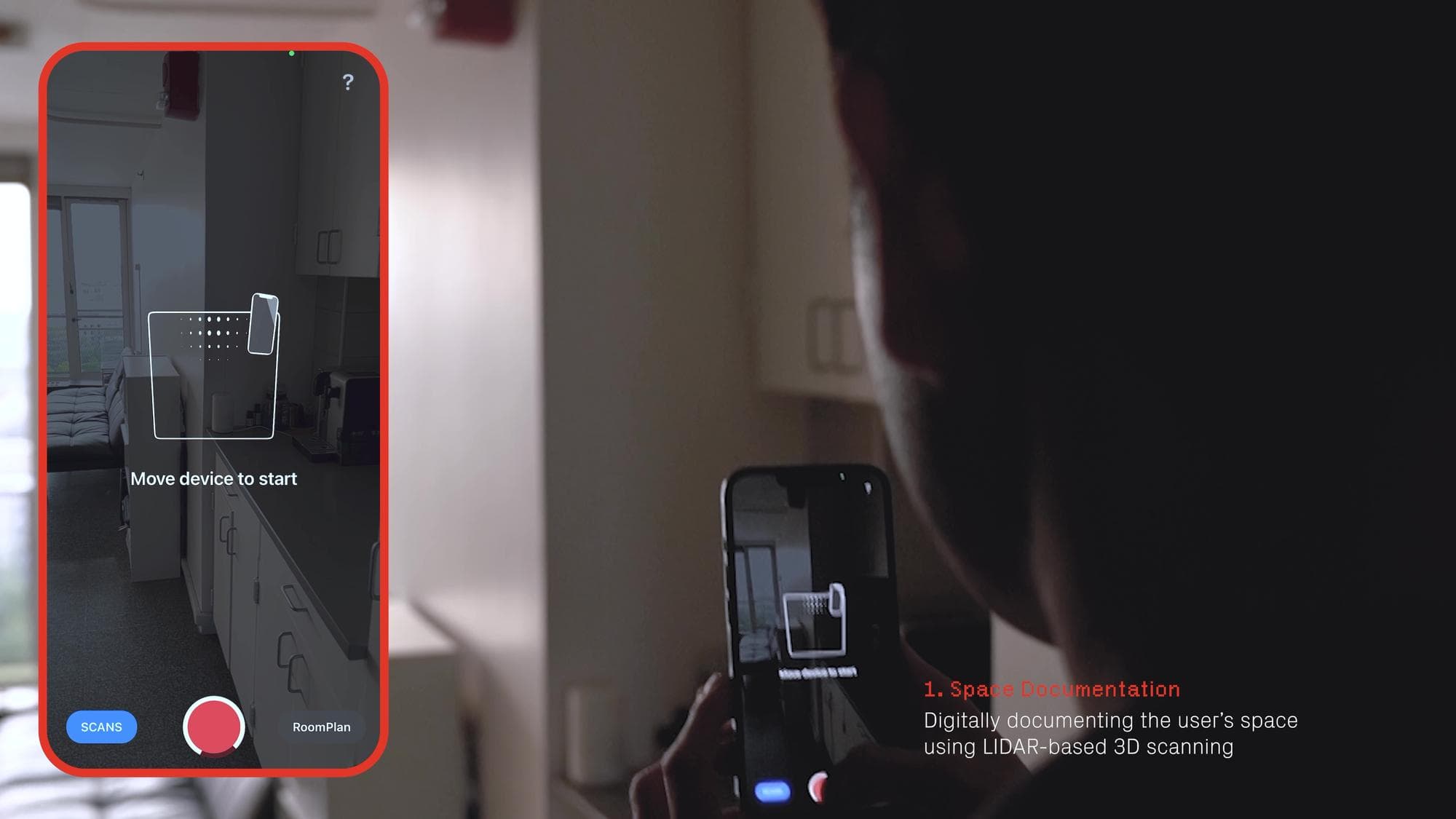
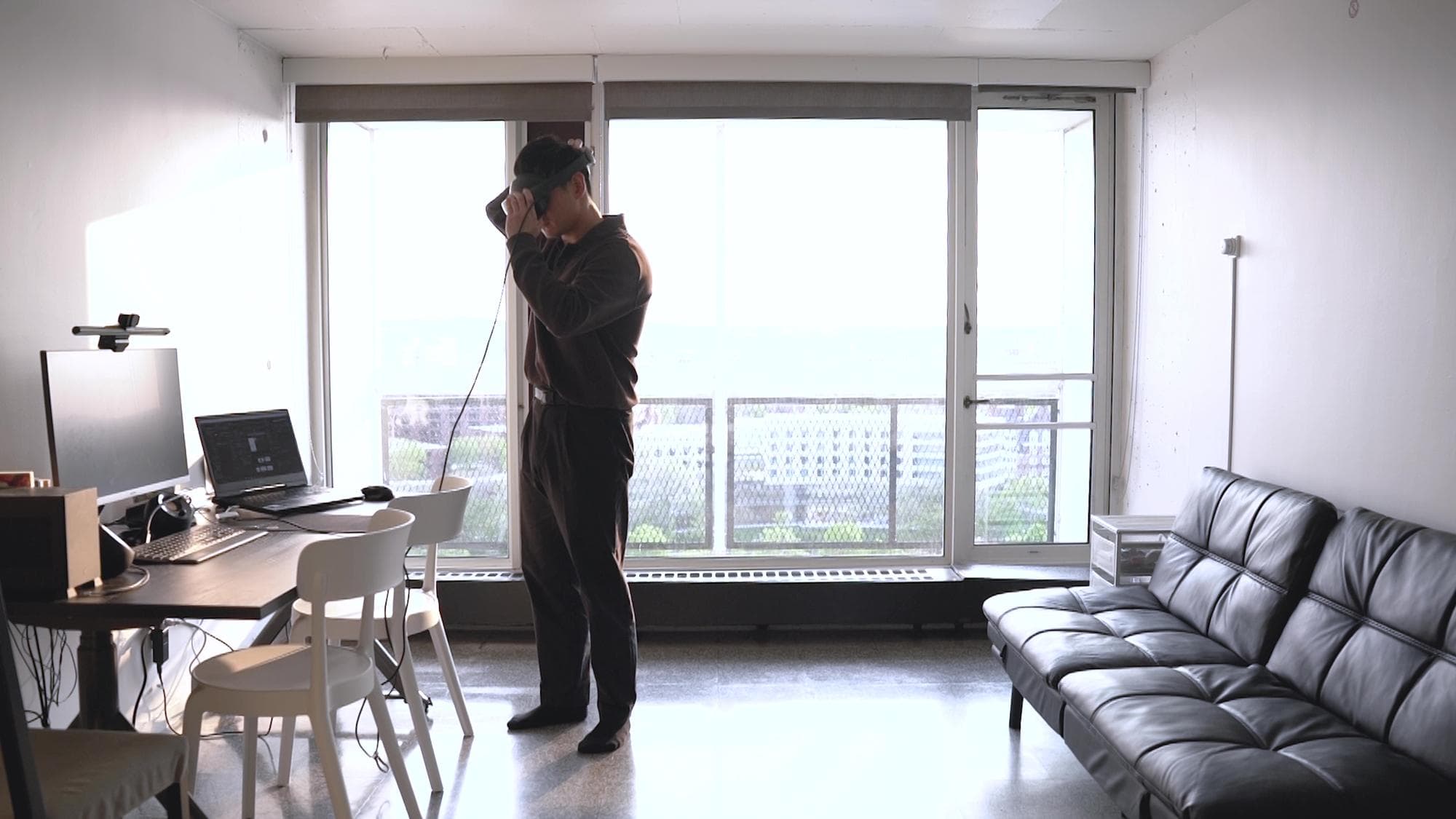
1. Users scan their physical room using a 3D scanning app to generate a digital twin in VR.
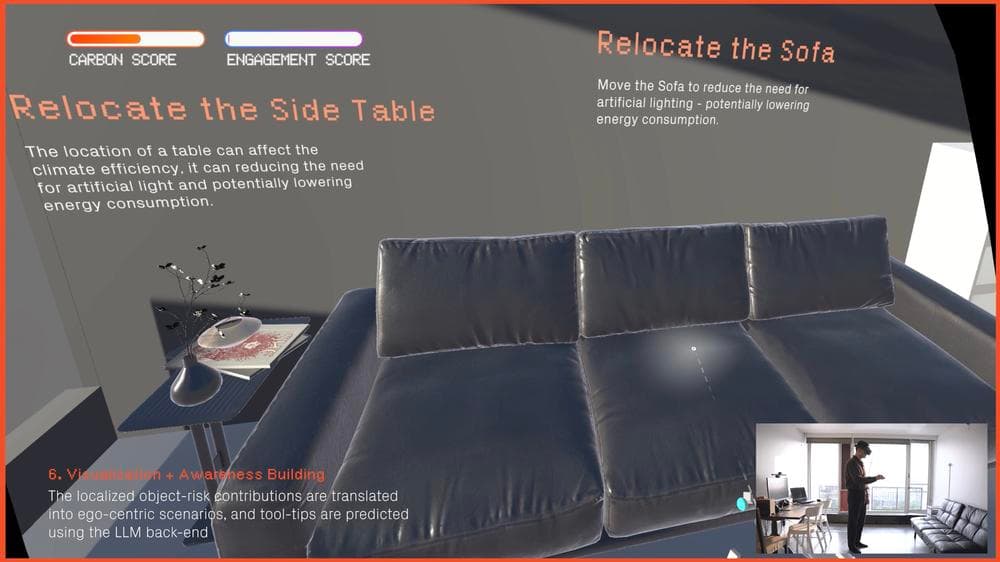
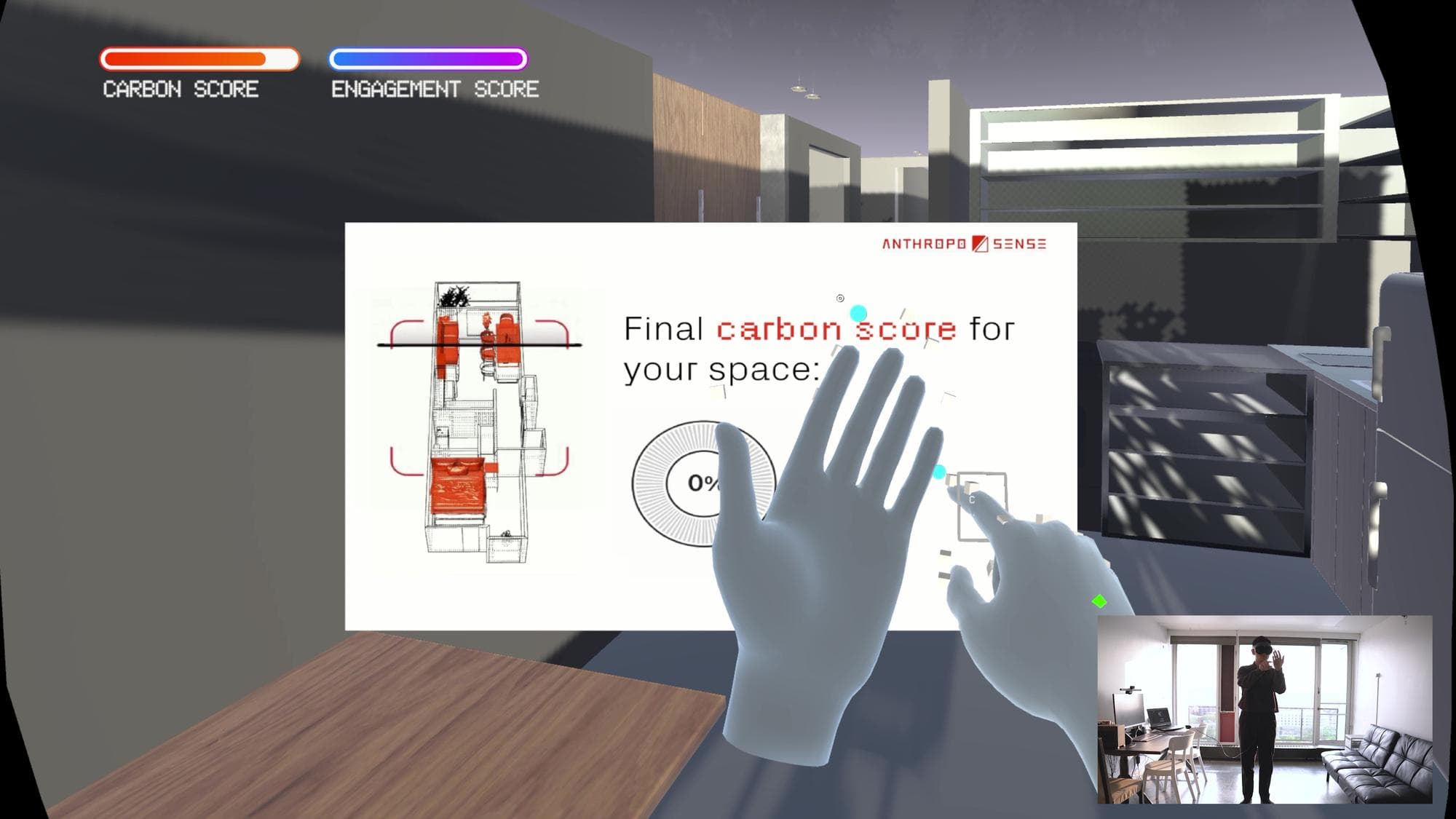
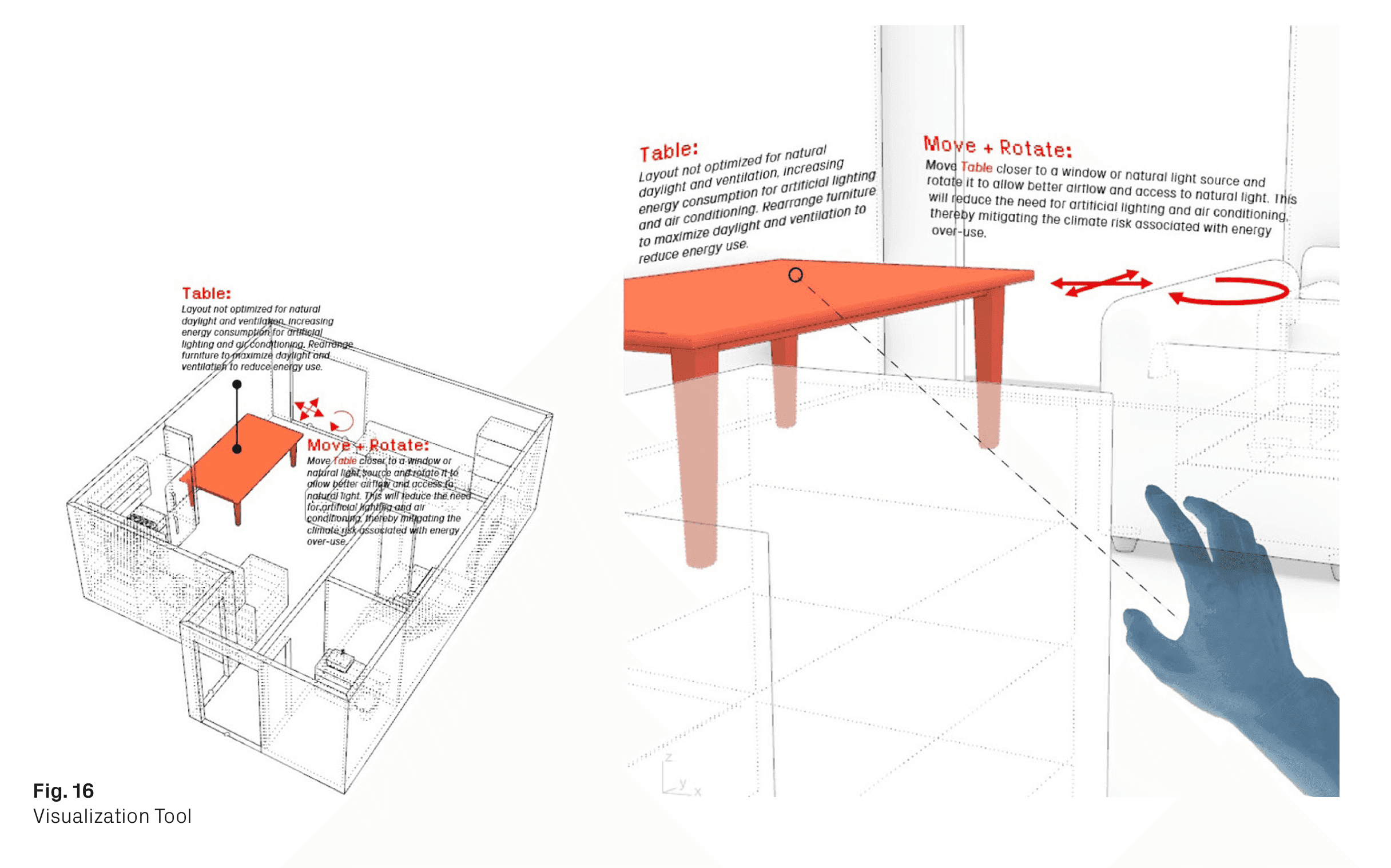
2. Wearing a VR headset, users receive a carbon score and specific recommendations for energy-efficient furniture placement.
3. Users adjust furniture positions using pinch-and-release actions within the virtual interface.
4. The system calculates updated climate scores and facilitates sharing results via social media APIs.

### Technical Specifications

| Technology | Role in Anthroposense Framework |
| :--- | :--- |
| Oculus | VR headset hardware and platform for user interaction |
| Microsoft MRTK | System for pinch-and-release furniture adjustment |
| Unity | Core development technology for the framework |
| Social Media APIs | Integration for sharing climate scores and results |
| LLMs | Integration of space and climate data for optimal positioning |

Anthroposense integrates space and climate data with Large Language Models (LLMs) to determine optimal furniture positions for energy efficiency. The framework leverages gamified tasks to enhance user engagement, encouraging individuals to optimize their physical environments and share their climate impact results.

## Frequently Asked Questions

### What is the main goal of the Anthroposense framework?
The main goal of Anthroposense is to address climate change challenges by transforming awareness into action through a framework that combines LLMs, digital twins, and VR gamification. It encourages users to engage in spatial reconfiguration to foster climate awareness through immersive, interactive experiences.

### How does Anthroposense use VR to help the environment?
Anthroposense uses VR to create an immersive environment where users can digitally arrange furniture based on optimal climate scenarios. The system provides real-time carbon scores and recommendations for energy-efficient furniture placement, helping users understand the environmental impact of their spatial choices.

### What technologies are used to build the Anthroposense app?
The Anthroposense app is built using a sophisticated technology stack that includes Oculus hardware, Microsoft Mixed Reality Toolkit (MRTK), and the Unity game engine. It also integrates Large Language Models (LLMs) for data processing and social media APIs for sharing results.

### How do users create a digital twin of their room in Anthroposense?
Users create a digital twin by scanning their physical room using a 3D scanning application. This data is then imported into the VR environment, allowing the user to interact with a virtual representation of their actual living space while wearing a VR headset.

### What kind of feedback does the app give regarding furniture placement?
The app provides users with a carbon score and specific recommendations for energy-efficient furniture placement. As users adjust their furniture using pinch-and-release actions, the system recalculates and displays updated climate scores based on the new spatial configuration.

### Can I share my Anthroposense carbon score on social media?
Yes, the Anthroposense app features social media API integration. This allows users to share their calculated climate scores and optimized room configurations with their social networks, encouraging broader engagement with climate-conscious spatial design.

## Related Pages
- [Home](https://wujoseph.com/)
- [Work](https://wujoseph.com/work)
- [Meta Reality Labs](https://wujoseph.com/work/meta-reality-labs)
- [BMW x Meta AR Research](https://wujoseph.com/work/bmw-ar-research)
- [NeuroCreate](https://wujoseph.com/work/neurocreatee)

## About Joseph Wu
Joseph Wu is a Product Engineer specializing in AI and human-computer interaction through innovative design and coding. His work focuses on integrating cutting-edge technology like robotics, augmented reality, and digital twins to solve complex problems across various industries.