---
title: Robotic 3D Printing - Joseph Wu
site: Joseph Wu
site_url: wujoseph.com
description: A research project exploring the manipulation of light trajectories and refraction using robotic 3D printing with transparent PLA and custom hardware adapters.
page_type: landing
url: https://wujoseph.com/work/medium-x-robot-3d-printing
date_modified: 2024-05-22
---

> This research project utilizes robotic 3D printing with transparent Polylactic Acid (PLA) to precisely manipulate light containment, refraction, and ambiance. By developing a custom laser-cut adapter to interface a PLA plastic gun with a robotic arm flange, the system enables the testing of critical variables including material density, layer height, and printing paths. Leveraging Rhino and Grasshopper for movement simulation, the project achieves rapid fabrication of hardware to create bespoke light performances and atmospheric spatial designs.

# Robotic 3D Printing

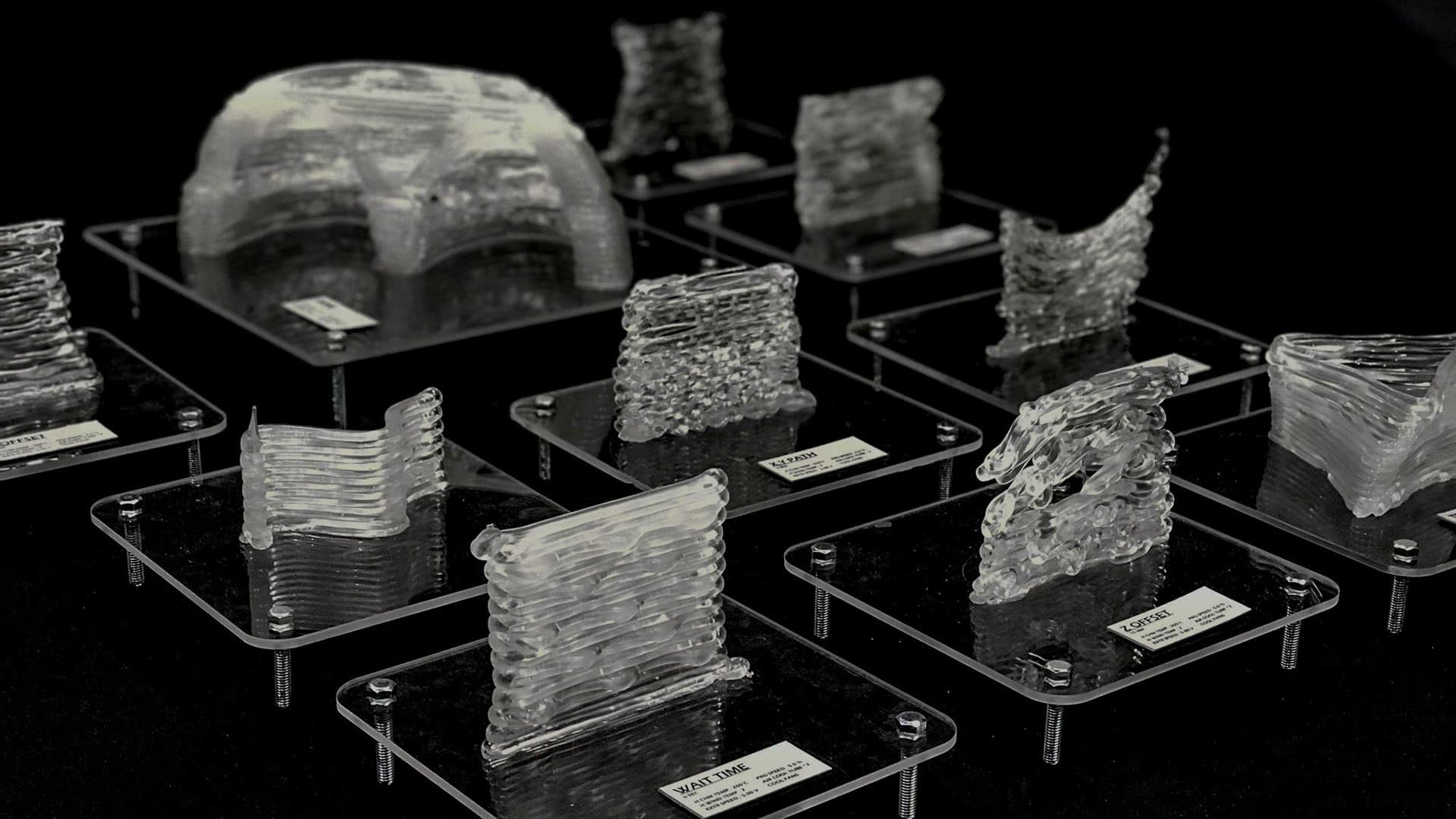
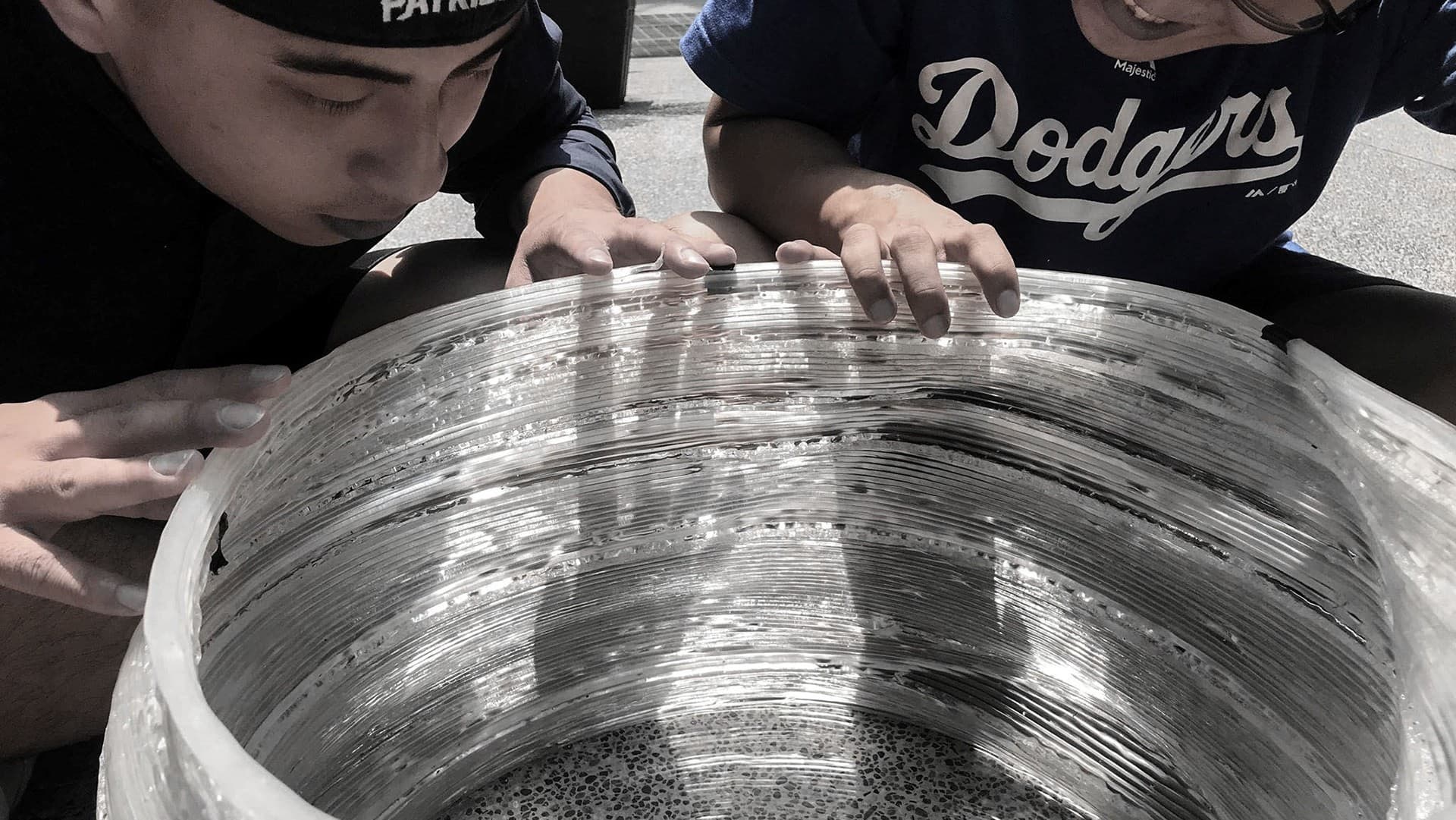
Transparent Polylactic Acid (PLA) serves as the primary material for this research, which explores the interplay between material substance and immaterial light. This project develops a novel method for shaping light trajectories, reflection, and ambiance by precisely manipulating light containment and refraction parameters.

The research utilizes specific control variables to analyze light imaging under varying conditions:
*   **Density:** Material concentration and internal structure.
*   **Layer height:** The vertical resolution of the 3D printed material.
*   **Printing path:** The specific trajectory followed by the robotic arm.
*   **Light sources:** Various types of illumination used to test imaging results.

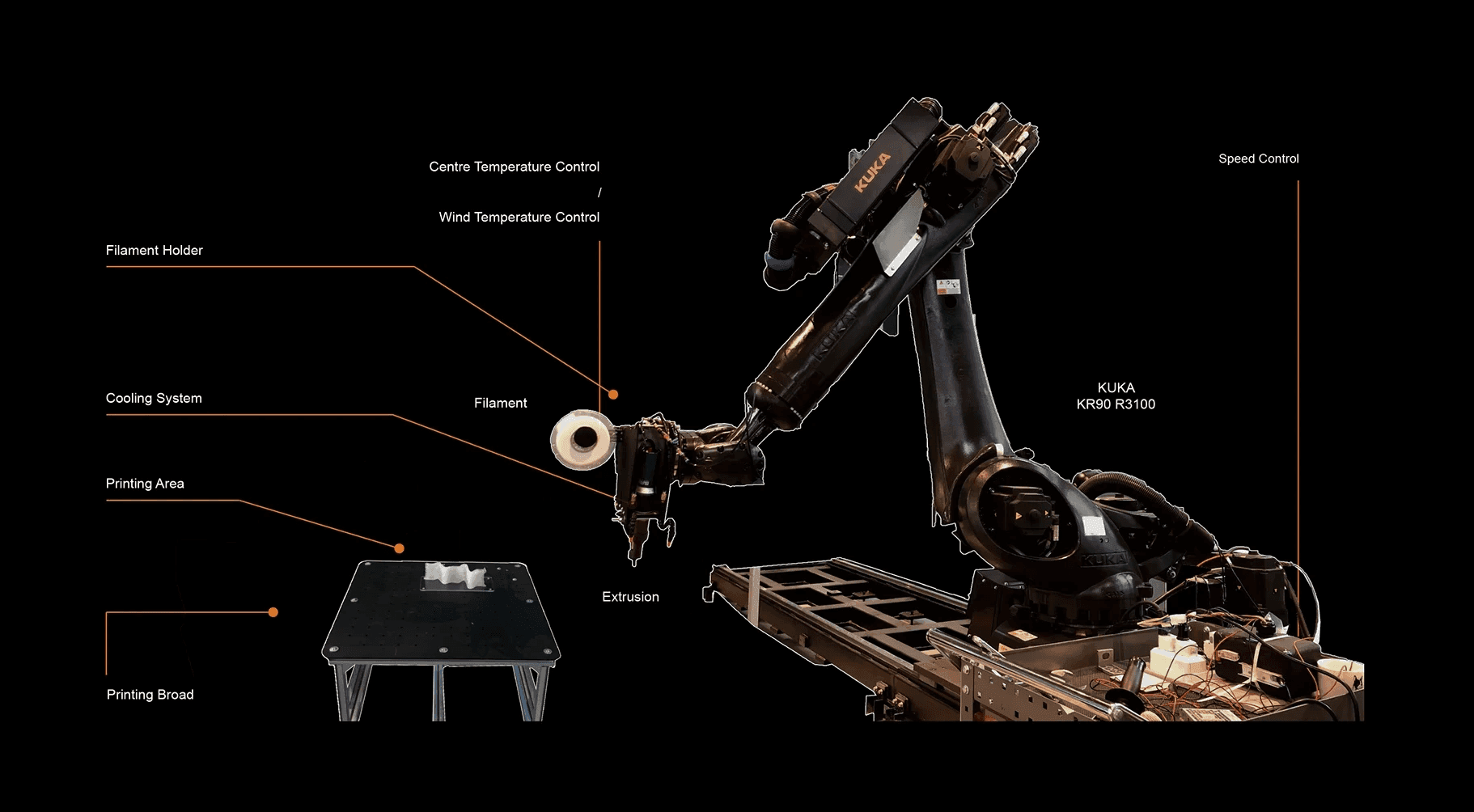
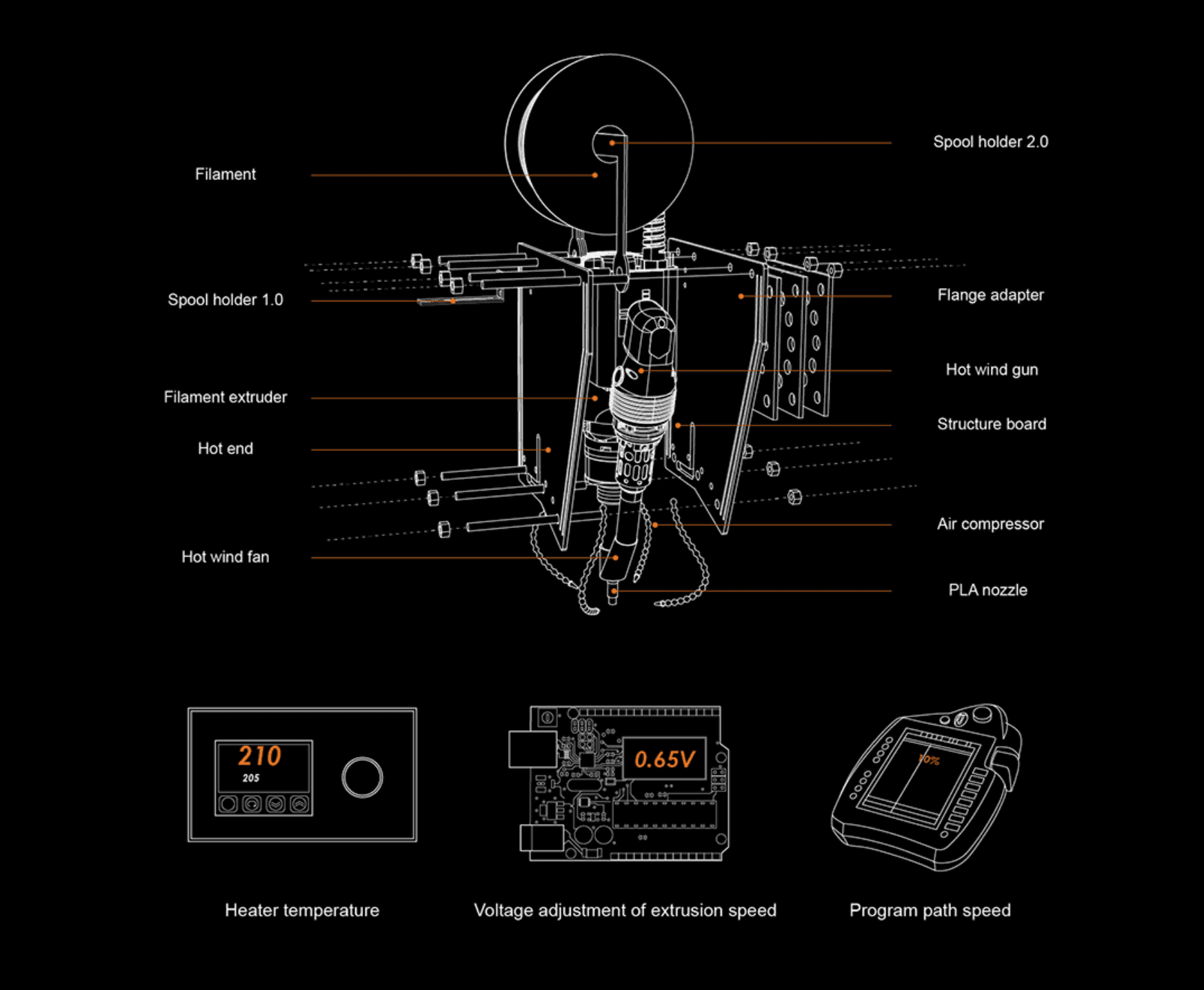
A custom-developed adapter secures a PLA plastic gun to the robotic arm's flange to facilitate precise execution. These research findings inform the creation of bespoke light performances designed to evoke specific emotions or visions. The next stage of development involves designing a pattern or alphabet that imbues physical space with a specific atmosphere intended to resonate with viewers.

## Team

Han Lin and Tsung-Han Tsai developed a custom adapter through laser cutting and rapid fabrication to integrate hardware components. This specialized adapter is designed to securely hold a PLA plastic gun and attach it directly to a robotic arm, enabling the execution of precise robotic 3D printing tasks.

The project utilizes the Rhino and Grasshopper 3D modeling platforms to achieve high-precision control over the robotic arm. These software tools enable the team to simulate complex movements and manage the exact trajectories required for atmospheric light performances and controlled refraction.

| Tool / Technology | Application |
| :--- | :--- |
| Laser Cutting | Adapter development and rapid fabrication |
| Rapid Fabrication | Adapter development and hardware construction |
| Rhino | 3D modeling and robotic arm simulation |
| Grasshopper | Robotic arm control and movement simulation |

## Frequently Asked Questions

### What materials are used in this robotic 3D printing research?
The project primarily utilizes transparent Polylactic Acid (PLA) as the printing material. This material is specifically chosen for its properties that allow for the manipulation of light trajectories, reflection, and refraction through 3D printed structures.

### How is the robotic arm controlled for 3D printing?
The robotic arm's movements are simulated and controlled with high precision using the 3D modeling platforms Rhino and Grasshopper. This software integration allows the team to program exact printing paths and analyze movement sequences before physical execution.

### What is the primary goal of manipulating light trajectories in this project?
The research aims to develop a novel method for shaping light reflection and ambiance to create bespoke light performances. By controlling light imaging through material manipulation, the project seeks to design patterns or spatial "alphabets" that evoke specific emotions and atmospheres.

### How is the PLA gun attached to the robotic arm?
A custom-designed adapter was developed using laser cutting and rapid fabrication techniques. This hardware component is engineered to securely hold a PLA plastic gun and attach it directly to the robotic arm's flange, ensuring stability during the printing process.

### What software is used to simulate the robotic movements?
The project utilizes the combination of Rhino and Grasshopper for all 3D modeling and robotic simulation. These tools provide the necessary precision to control the robotic arm and test variables such as density and layer height in a digital environment.

## Related Pages
- [Robot Cube](/work/robot-cube)
- [BMW x Meta AR Research](/work/bmw-ar-research)
- [Meta Reality Labs](/work/meta-reality-labs)
- [Anthroposense](/work/anthroposense)
- [FreeCAD MCP](/work/freecad-mcp)

## About Joseph Wu
Joseph Wu is a Product Engineer specializing in AI and human-computer interaction through innovative design and coding. His work focuses on integrating cutting-edge technology such as robotics, augmented reality, and digital twins to create advanced engineering solutions for technology companies and researchers.